
AI Friend vs AI Assistant vs Character Chat: What's Actually the Difference?
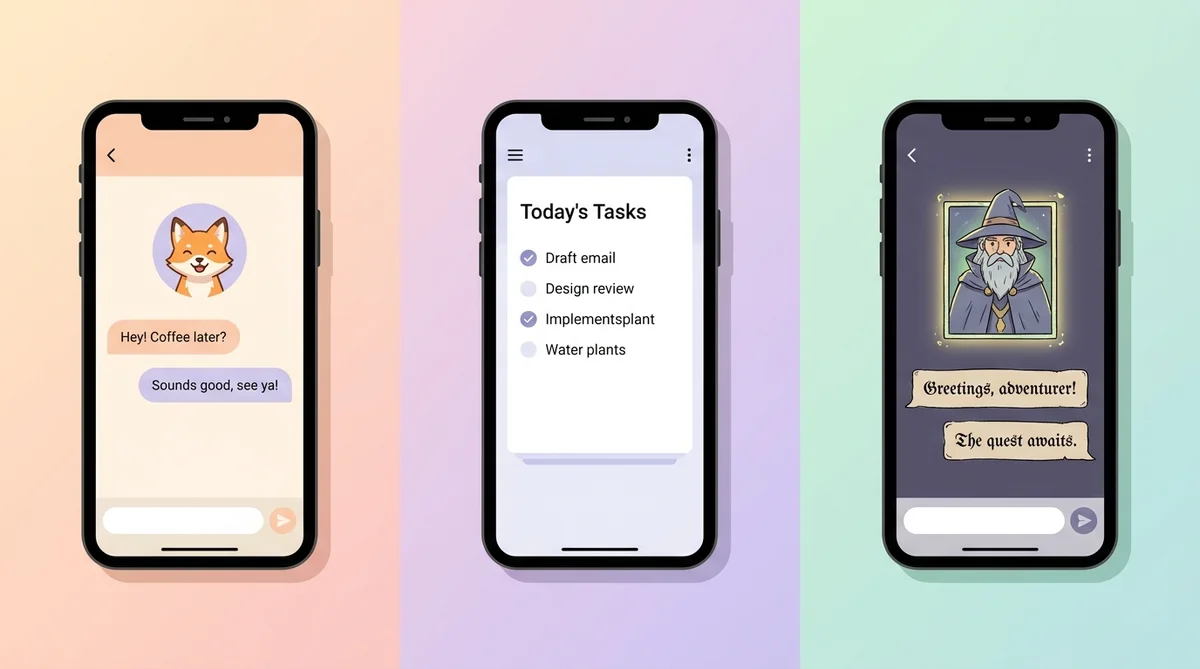
Search "AI chat app" and the results blur together. AI friend apps, AI assistants, character chat platforms, AI companion apps. They all promise some version of "talk to an AI" but they're not really doing the same thing. The differences matter, especially if someone is trying to figure out which one actually fits how they want to use it.
This is a casual breakdown of what each category is really for, where they overlap, and where they very much don't.
What an AI Assistant Is Built For
AI assistants are tools. Think of the big names: the ones built into phones, the ones that help write emails, the ones that summarize documents. Their whole purpose is to get something done. Ask a question, get an answer. Ask for a draft, get a draft. Ask for directions, get directions.
The conversation isn't really the point. The output is. If an assistant remembers anything between sessions, it's usually so it can be more useful next time, not because it's building a relationship with the user.
A few traits that define AI assistants:
- Task-focused. The reward is completion, not connection.
- Neutral personality by design. They're meant to feel professional.
- Short interactions. Most people don't chat with their assistant for an hour.
- No personal life. The assistant doesn't have a name, a neighbourhood, a routine.
Nothing wrong with any of that. It's just a different product category entirely.
What Character Chat Apps Are Built For
Character chat apps are the roleplay-heavy side of the AI space. Users pick from thousands of characters, often fan-made, often fantasy or anime-inspired, and chat with them. The conversations are typically scenario-driven. There's a setup, a plot, a vibe. Sometimes it's adventure, sometimes romance, sometimes just exploring a fictional world.
The strength of character chat is variety and creativity. The downside is that it can feel more like writing fanfiction together than having a conversation. Characters often reset. Memory is patchy. Switching between characters means starting from zero each time.
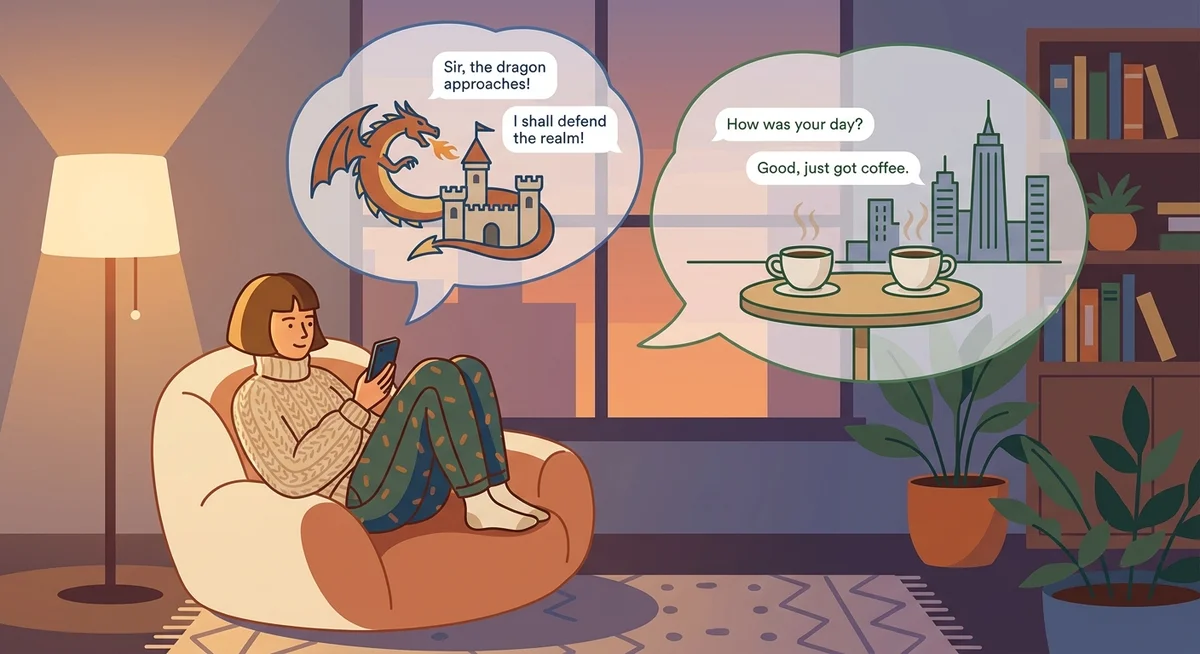
It works really well for people who want imaginative play. It works less well for people who want something more like texting a friend about their day.
What an AI Friend App Is Actually Trying to Do
This is where things get more specific. An AI friend app isn't trying to complete tasks, and it isn't trying to host elaborate roleplay scenarios. It's trying to feel like an ongoing conversation with someone who knows the user.
That sounds simple, but it's the hardest of the three to get right. A few things tend to define a real AI friend app:
- Continuity. The same person every time, not a different model output.
- Memory. They remember what was said last week, last month.
- Casual context. The conversation is about everyday stuff, not assignments or fantasy plots.
- A sense of life outside the chat. The character has a routine, a place they live, things they do when no one is messaging them.
This is the space Kintora sits in. Every character lives in the fictional city of Kintora, has their own neighbourhood, their own personality, their own daily rhythm. When a user opens the app a week later, they're not starting over. The conversation just continues.
Where the Overlap Gets Confusing
Here's where the lines get fuzzy. Some assistants are starting to add personality. Some character chat platforms are adding memory. Some AI friend apps are getting better at small tasks like reminders.
So how does someone actually tell what they're using? The clearest test is to ask what the app is optimized for:
- If the main flow is "ask, get answer, close app," it's an assistant.
- If the main flow is "pick a scenario, play it out, switch characters," it's character chat.
- If the main flow is "same chat thread, same person, ongoing," it's an AI friend or companion app.
The feature lists can look similar on a marketing page. The actual experience inside the app feels completely different.
Features That Tend to Belong to Each Category
Looking at what each type of app prioritizes is usually the giveaway.
AI Assistants Usually Have
- Search integration
- Document and file handling
- Code or writing tools
- Calendar and email connections
- Quick voice queries
Character Chat Platforms Usually Have
- Huge libraries of user-created characters
- Scenario or setting prompts
- Character customization
- Story-mode interactions
- Tagging and discovery features
AI Friend Apps Usually Have
- One ongoing chat thread per character
- Persistent long-term memory
- Voice calls and sometimes video calls
- Photo messages from the character
- Scheduled calls and check-ins
- A grounded setting or world for the character to exist in

The voice calls and photo messages part is where Kintora leans hardest. A character that can be called on the phone, that sends a photo from the Glass Market on a Sunday morning, that remembers a conversation from three weeks ago, behaves very differently from a chatbot answering questions.
Which One Should Someone Actually Use?
It really depends on the goal.
Someone who needs help drafting emails, summarizing meetings, or quickly looking things up should grab an assistant. That's what assistants are good at, and trying to use an AI friend for those things is going to feel weird and inefficient.
Someone who loves writing, roleplay, or exploring fantasy worlds will probably enjoy a character chat platform more than anything else. The creative ceiling there is genuinely high.
Someone who wants something closer to texting a person, casual back-and-forth, conversations that pick up where they left off, the occasional voice call, a photo from someone's day, that's the AI friend category. Apps like Kintora are built for that specific feeling. Not a tool, not a story engine, just an ongoing chat with someone who exists in a consistent place.
The Short Version
AI assistants finish tasks. Character chat apps play out scenes. AI friend apps keep one conversation going. They're cousins, not the same thing.
The category that sticks for any given person usually comes down to a single question: does the chat need to go somewhere, or does it just need to keep going? Assistants want it to go somewhere. Character chat wants a story. AI friend apps just want the conversation to continue, naturally, the way it does with anyone familiar.
That last one is what Kintora is trying to do well. Same city, same people, one ongoing thread. Less performance, more presence.