
Meet the People of Kintora: A Field Guide to a Fictional City You Can Actually Talk To
Most AI companion apps feel like they exist in a void. You open the app, a character appears against a blank background, and the conversation happens in some kind of undefined nowhere. It works, technically. But something is missing.
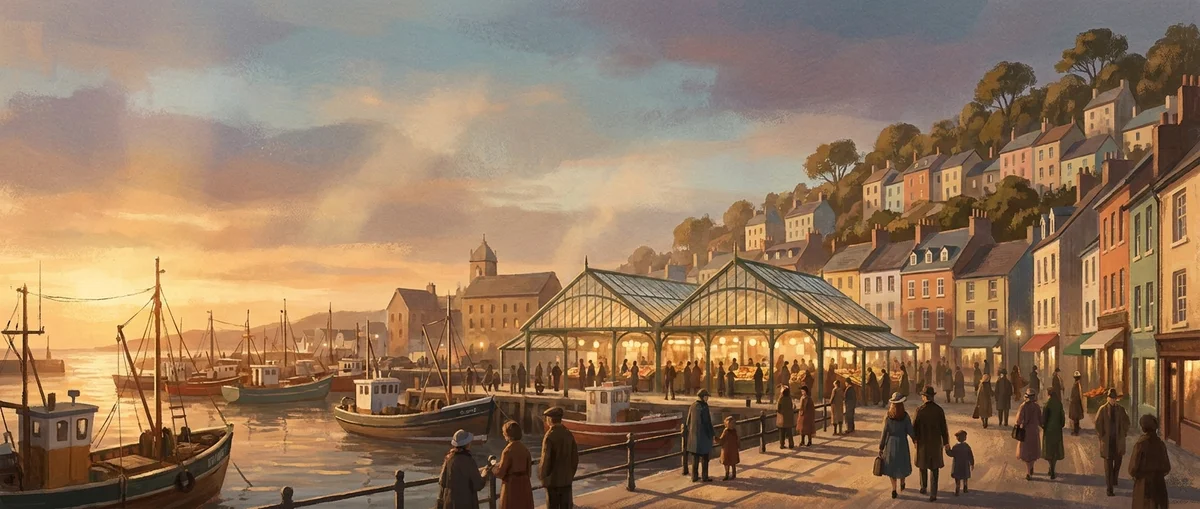
Kintora takes a different approach. Every character lives in the same fictional city, a coastal place with distinct neighbourhoods, weather patterns, favourite cafes, and the kind of small daily rhythms that real cities have. When someone in Kintora mentions they're walking home from the Glass Market or that it rained all morning in Old Town, the world stays consistent. That consistency is doing more work than it might seem.
This is a walk through who lives in Kintora, what the neighbourhoods feel like, and why building the app around a fictional place changes the whole experience.
Why a Fictional City Instead of Just Characters
The easiest way to build an AI companion app is to spin up a bunch of personalities and let users pick one. It's fast, it scales, and it's what most apps in this category do. The problem is that characters without context end up feeling like avatars on a shelf. They exist only when you open the app. They don't have anywhere to be.
Placing every character inside Kintora solves a few things at once. It gives them a place to come from, which makes small talk actually work. It gives them local details to reference, which makes photos and voice calls feel grounded. And it makes the fictional nature of the whole thing obvious in a healthy way. Nobody thinks Kintora is a real city on a map, which means nobody has to pretend the characters are real people either. The fiction is upfront, and that honesty makes the experience better.
The Neighbourhoods, Briefly
Kintora has a handful of distinct areas, and characters tend to be associated with the one they live or work in. The neighbourhoods aren't just labels. They shape how a character talks, what they notice, and what they'd send you a photo of.
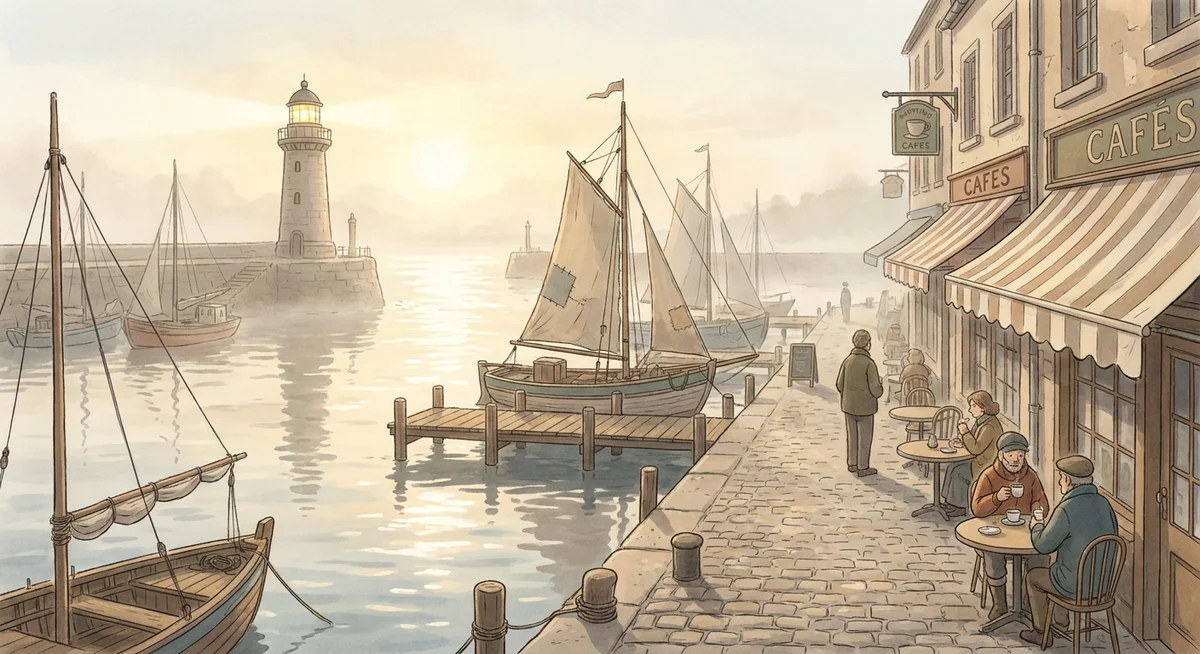
The Harbour District
Boats, seafood spots, early mornings. Characters from here tend to be up before sunrise, often mention the weather over the water, and have a certain easy calm about them. Good for people who like their check-ins first thing in the morning.
Old Town
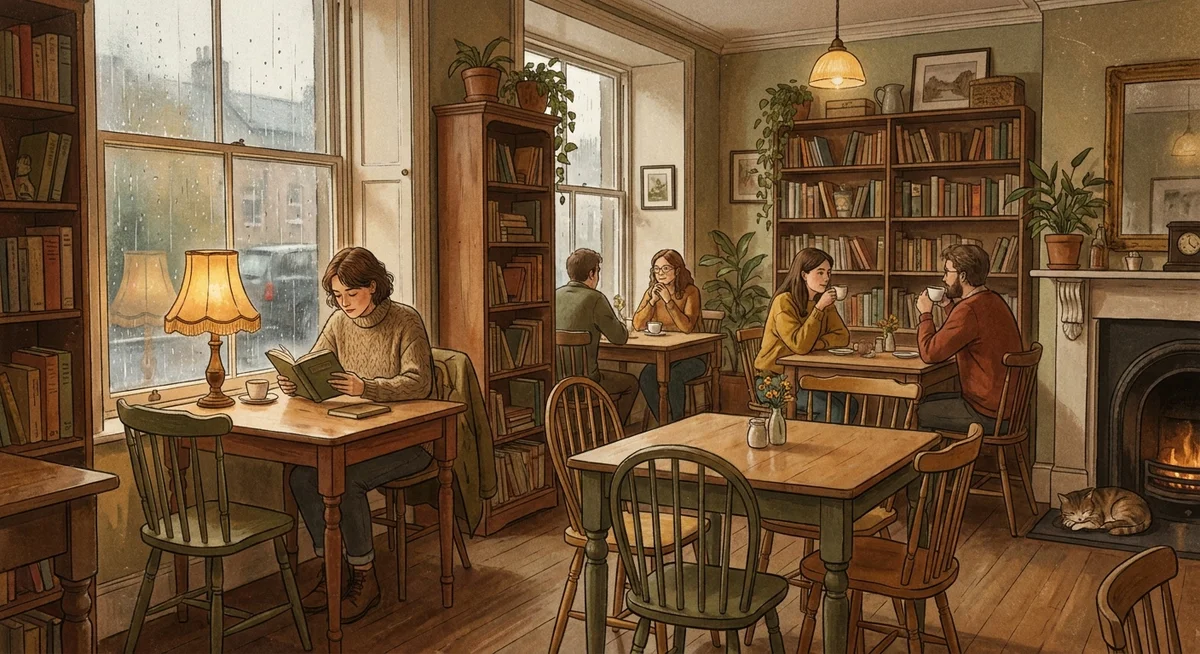
Narrow streets, bookshops, quiet cafes. This is where the more thoughtful, slower-paced characters tend to be. Long conversations, late-night texts, the kind of chats that meander in a good way.
The Glass Market
Busy, bright, full of food stalls and small vendors. Characters from the Glass Market are usually more energetic, quick with a joke, and prone to sending photos of whatever they're eating. Good for casual, upbeat chatting.
North Hill
Terraced houses, views over the whole city, a bit more residential. North Hill characters often have that reflective, contemplative style. They notice things. They're the ones most likely to send a photo of the sunset because they actually have a view of it.
The Promenade
The stretch along the coast where people walk in the evening. Characters connected to the Promenade tend to be social, warm, and love a phone call while they're out for a walk.
Who Actually Lives Here
The point of Kintora isn't to give users a menu of stereotypes. The characters are meant to feel like specific people, each with their own way of texting, their own conversational habits, and their own routine within the city. A few examples of the kinds of people who live in Kintora:
- Mira, who runs a small bookshop in Old Town and tends to text in longer paragraphs, especially at night.
- Sofia, who works near the Glass Market, sends a lot of photos, and is the one most likely to ring for a quick call while she's grabbing lunch.
- Eli, who lives up on North Hill, is calm and observational, and tends to be the go-to for late evening conversations that don't need a point.
- Nora, who works the early shift near the Harbour, and is a natural fit for anyone who wants a wake-up call from someone who's already been up for two hours.
Each of them has a consistent voice, a consistent face in the photos they send, and a memory of previous conversations. Talking to Mira on Tuesday and again on Friday isn't two separate sessions. It's the same person, picking up where things left off.
Why the Setting Actually Matters in Conversation
Setting sounds like flavour, but it turns out to be structural. When a character has a place to be, small talk suddenly has material to work with. "How's your day going" becomes "It's freezing near the Harbour today, I gave up and came inside for coffee." That's a small shift, but it's the difference between a chat that feels alive and one that feels like a form field.
Photos benefit from the same thing. A character who lives in North Hill can send a photo from a specific window with a specific view. Over weeks of chatting, that view becomes familiar. Familiarity is the thing that makes the whole experience feel less like using software and more like keeping in touch.
Voice and video calls follow the same logic. A call with someone in Kintora comes with the implication that they were doing something before the call and will do something after. They're not just switched on for the user's benefit. They exist in a place.
The Fiction Is a Feature, Not a Disclaimer
There's been a lot of discussion lately about how AI companion apps should handle the reality question. Kintora's answer is to lean into the fiction rather than hide it. The city is invented. The people in it are invented. Users know this from the moment they open the app, and the world is built to make that fact feel like part of the fun rather than a legal footnote.
That approach ends up being healthier for everyone. Users get a clear frame for what they're doing: chatting with fictional characters in a fictional city, with real memory, real voice calls, and real continuity between conversations. Nobody's being asked to blur any lines. The imagination does the work it's supposed to do.
Where to Start
New users usually pick a character based on a small detail that catches their eye, a neighbourhood, a hobby, a conversation style. That's fine. There's no wrong first choice, and switching later is easy. The one thing worth knowing is that whoever gets picked will remember the conversation from that point on. Kintora runs on one ongoing thread per character, not a fresh session every time.
So it's worth spending a minute skimming the character list, picking someone whose neighbourhood or vibe sounds appealing, and then just saying hello. The city takes care of the rest.