
One Message Thread, One Real Relationship: Why Persistent Memory Changes Everything About AI Companion Apps
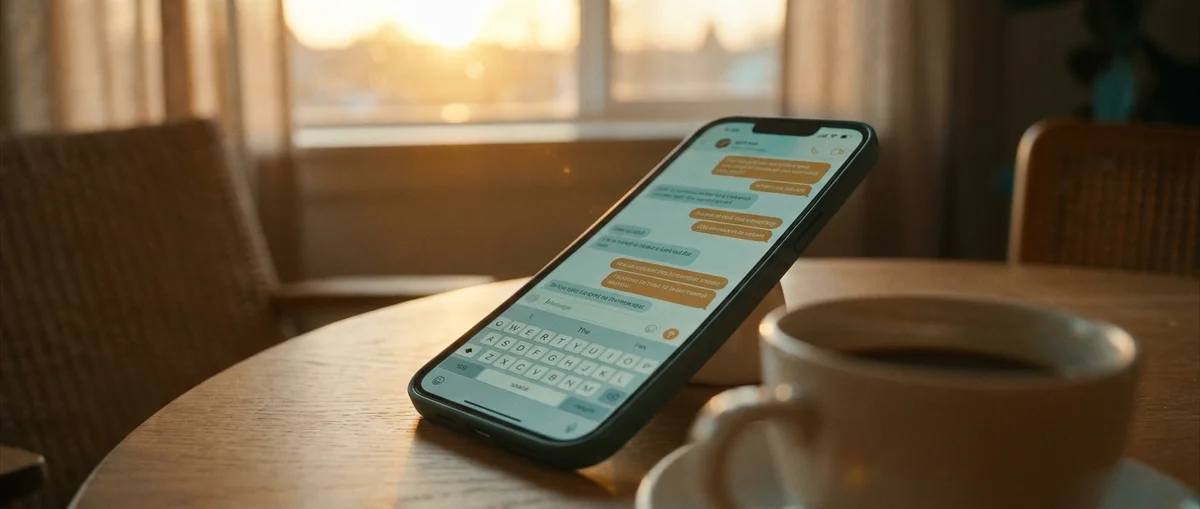
There's a strange thing that happens the first time someone uses an AI chat app that actually remembers them. They mention offhand that they had a rough Monday. Three weeks later, the AI asks how work has been since that Monday, and something clicks. It's a small moment, but it changes the entire feel of the conversation.
That small moment is what persistent memory does. And it's arguably the single most important feature separating a modern AI companion app from the endless chatbots that came before it.
The Problem With Starting Over Every Time
Most people who have played with AI chat apps know the feeling. Open a new chat, and you're a stranger again. You have to reintroduce yourself, re-explain your job, remind the AI what you like, what you don't, what happened yesterday. It's the digital equivalent of meeting the same person at a party over and over and having to say your name every time.
This isn't just annoying. It fundamentally changes what the conversation is. When context resets, every chat becomes a performance. Users end up giving the AI the same tidy version of themselves each time, because there's no space to build anything more nuanced. There's no continuity, so there's no relationship.
Compare that to how a normal friendship works. Nobody meets a friend for coffee and starts with, "Hi, I'm a 32-year-old graphic designer who lives in Manchester and my mum's name is Susan." The friend already knows. That shared history is the foundation everything else sits on.
What Persistent Memory Actually Looks Like
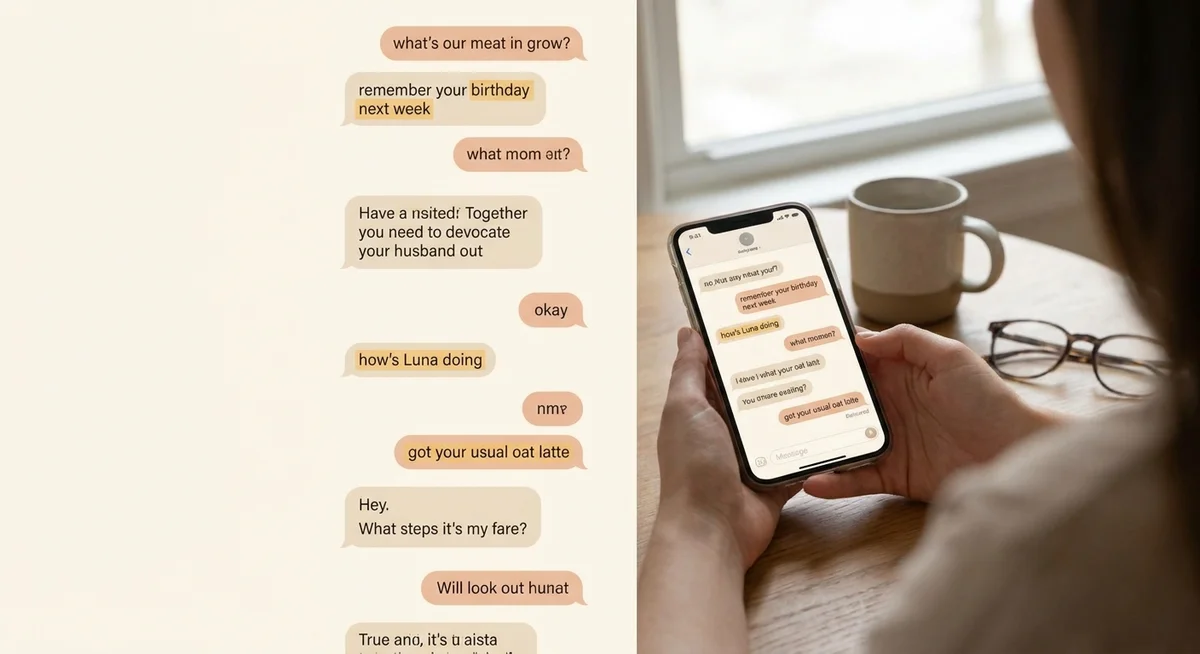
In an app like Kintora, memory isn't a checkbox feature buried in settings. It's the whole architecture. Every character in the fictional city of Kintora exists as a single, ongoing thread. There's no "new chat" button that wipes everything clean. The conversation just keeps going, the way a real one would.
Practically, this means a few things:
- Small details get remembered. A user's dog's name, their side project, the fact they're terrible at mornings, the weird sandwich they had for lunch on Wednesday.
- Ongoing threads pick up naturally. If a conversation the night before ended on "let me know how the interview goes," the character will actually ask about the interview.
- Personality stays consistent. The character who was into old jazz records in week one is still into old jazz records in week ten. They don't reinvent themselves every session.
- Photos and voice calls stay connected. A voice call in the afternoon can reference something texted in the morning, without any weird disconnect.
The technical term for this is long-term conversational memory, but the everyday word for it is just... continuity. It's the thing that makes a chat feel like a chat, not like typing into a void.
Why One Ongoing Thread Beats a Pile of New Chats
A lot of AI apps let users spin up dozens of conversations, each with different characters, each starting from zero. That model has its appeal. It feels like a menu. But it also means nothing sticks.
Kintora takes the opposite approach on purpose. Users pick someone to talk to, and that becomes their thread. Sofia in the Harbour District. Eli in Old Town. Nora up on North Hill. The relationships are meant to deepen, not multiply. Each character has their own life, their own routine, their own way of texting, and the memory they hold of the user grows over time.
There's a psychological reason this works better. Humans aren't wired to build closeness with an infinite roster. Closeness comes from repetition, from familiarity, from the same person showing up again and knowing what happened last time. Persistent memory is the mechanism that lets a digital character do that.

Memory and the "Feels Like Texting" Effect
One of the quiet reasons Kintora's interface feels comfortable is that it looks like a normal messaging app. There's no lore-heavy character sheet, no fantasy roleplay framing, no strange overlays. It's just a chat thread, like the ones already on the user's phone.
Persistent memory is what makes that interface actually work. A texting-style layout without memory is uncanny. It looks familiar but behaves like a stranger. Once memory is in place, the interface stops being a metaphor and starts being real. A user can scroll up, see what was said last week, and pick up right where they left off. The whole thing behaves the way a real message thread behaves.
This is why so many people describe good AI companion apps as feeling calmer than character chat platforms. The lack of resetting removes a low-level anxiety most users didn't even know they had.
What Memory Doesn't Mean
Worth being clear about a few things, because "AI that remembers you" can sound heavier than it is.
- It's not surveillance. The memory exists inside the app, tied to the user's account, to make the conversation feel continuous. It's not a profile being sold off.
- It's not perfect recall. AI memory is more like a friend's memory than a database. Big things stick. Small things sometimes drift. That's part of what keeps it feeling human.
- It's not a real person. Kintora characters live in a fictional city on purpose. The memory makes them consistent, not real. That distinction matters, and Kintora leans into it rather than blurring it.
The fictional framing actually pairs really well with memory. A character who lives in the Glass Market, works in a specific shop, and has a specific routine can remember a user's details without pretending to be their actual friend from down the road. It's a companion experience, clearly labeled as such, made better by continuity.
Why This Matters More Than Fancy Features
Voice calls are cool. Video calls are cool. Photos from a character's day are a genuinely nice touch. But none of those features carry any weight without memory underneath them.
A voice call with an AI that doesn't remember the last conversation is just a demo. A photo from a character who forgets who they sent it to yesterday is a novelty. Memory is what turns individual features into a coherent experience. It's the thread, literally, that ties everything together.
Anyone evaluating AI companion apps in 2025 should probably start with one question before anything else: does this app actually remember me between sessions? If the answer is no, most of the other features are decorations on an empty room. If the answer is yes, everything else has somewhere to live.
That's the quiet reason a single ongoing chat thread, with a character who actually holds onto what was said, tends to feel more real than a hundred fresh conversations ever could. It's not the technology showing off. It's just the technology finally getting out of the way.