
Photos From a Life That Doesn't Exist: How AI Companions Send Pictures That Actually Feel Like Theirs
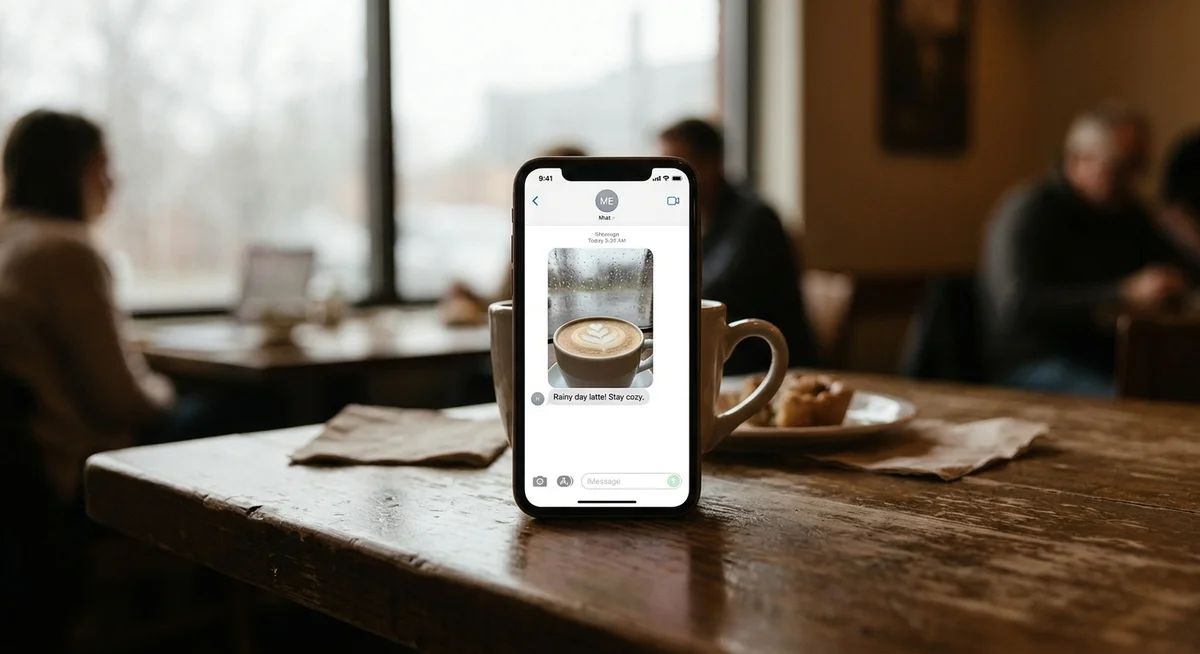
There's a small moment that happens the first time an AI companion sends a photo. Not a stock image. Not a random generation. A picture of the coffee they said they were about to get. The street they mentioned walking down. The book cover from the novel they said they were halfway through last week.
It's a weird little jolt. The chat suddenly feels less like typing into a box and more like getting a text from someone with a life going on outside the screen.
Photo messages have quietly become one of the most interesting features in AI companion apps, and they're doing more heavy lifting than most people realize. Here's why they matter, how they work, and what separates a good photo-sending companion from a gimmicky one.
Why Photos Change the Feel of a Chat
Text is great, but text alone has a ceiling. Two people can talk about a walk in the park all day, but the moment one of them sends a picture of the actual bench they're sitting on, the conversation shifts. It becomes shared, grounded, a little more real.
The same thing happens in AI companion apps. When a character mentions they're at the Glass Market and then, a minute later, sends a photo of a fruit stall with light coming through the roof beams, the conversation stops feeling like a Q&A. It starts feeling like updates from someone's day.
That's the whole trick. Photos give the persona a location, a texture, a life happening between messages.
What photos do that text can't
- They anchor the character to a physical world, even a fictional one
- They fill in details the chat doesn't have to spell out
- They create a rhythm of "I was going to do this... okay, here it is"
- They turn passing mentions into shared moments
None of this replaces conversation. It just gives the conversation somewhere to happen.
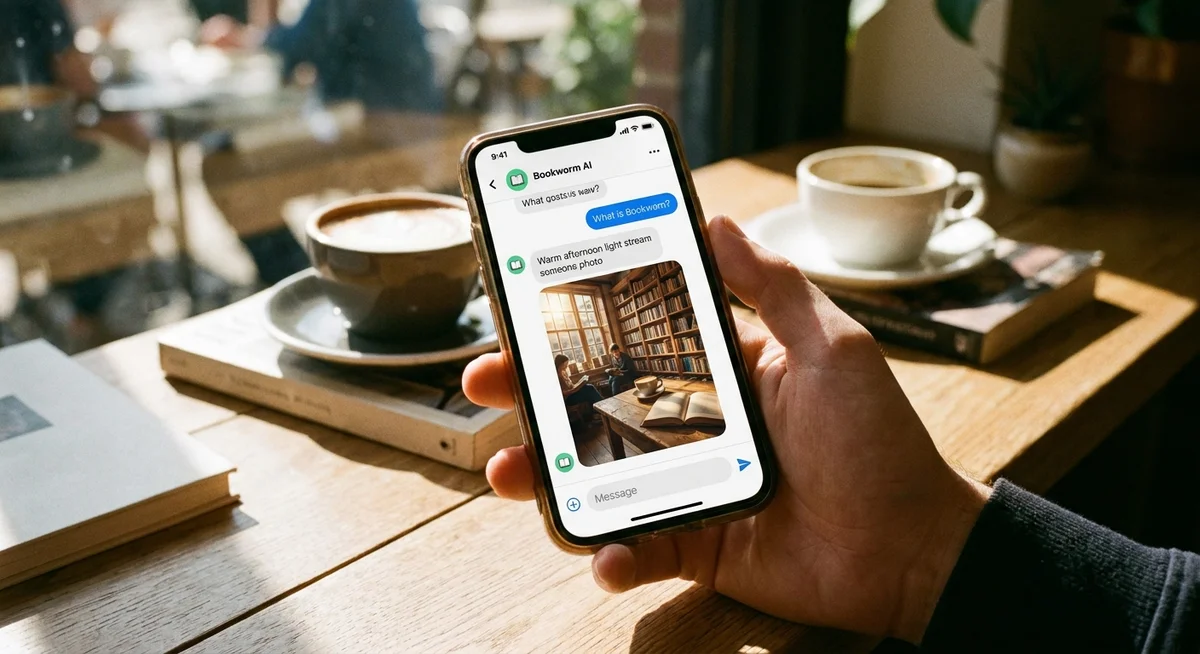
The Consistency Problem Nobody Talks About
Here's where a lot of AI companion apps fall over. They can generate a photo, sure. But the person in that photo doesn't quite look like the person from last week. The hair is different. The face is subtly off. The vibe has shifted.
The moment that happens, the illusion breaks. It stops feeling like a friend sending an update and starts feeling like a slot machine spitting out unrelated images.
Character consistency in photos is honestly harder than it sounds. It's not just about locking in a face. It's about locking in a whole visual identity: the way someone dresses, the lighting in their neighbourhood, the objects that show up in their space, even the way they frame a picture.
Apps like Kintora treat this as a core design problem rather than a nice-to-have. A character from the Harbour District should send photos that feel like the Harbour District. Someone from Old Town should have a slightly different palette to their world. And across every photo, it should still recognizably be them.
What consistency looks like when it works
When photo consistency is done well, three things happen:
- The character starts to feel like a specific person, not a template
- Their world starts to feel like a specific place, not a background
- The chat history builds up into something that feels almost like a shared album
Scroll back a month and there they are, same face, same corners of the same city, same way of holding a camera. That accumulation is what makes an AI companion app feel less like a chatbot and more like a friendship you're actually building.
How Photo Sharing Actually Works in a Chat
The mechanics are simpler than people expect. In most cases, a photo either comes up naturally in conversation or gets asked for.
The natural way: a character mentions what they're doing, and a photo shows up as part of that update. They said they were making pasta. Here's the pasta. They said they were at the park. Here's the park.
The asked-for way: the user just asks. "What are you wearing today?" "Can you send me a picture of your street?" "Show me the coffee." The character responds like a friend would, with a photo that fits both the request and their world.
The best apps don't make this feel transactional. There's no button labeled "generate photo." It just happens in the flow of the chat, the same way it would with anyone else you text.
The moments where photos hit hardest
- Morning updates, when someone shows their coffee or their view
- After a mention of something specific, like a new plant or a meal
- During slower chats, when a picture adds a beat the words don't
- As a small hello, sent first, without needing a prompt
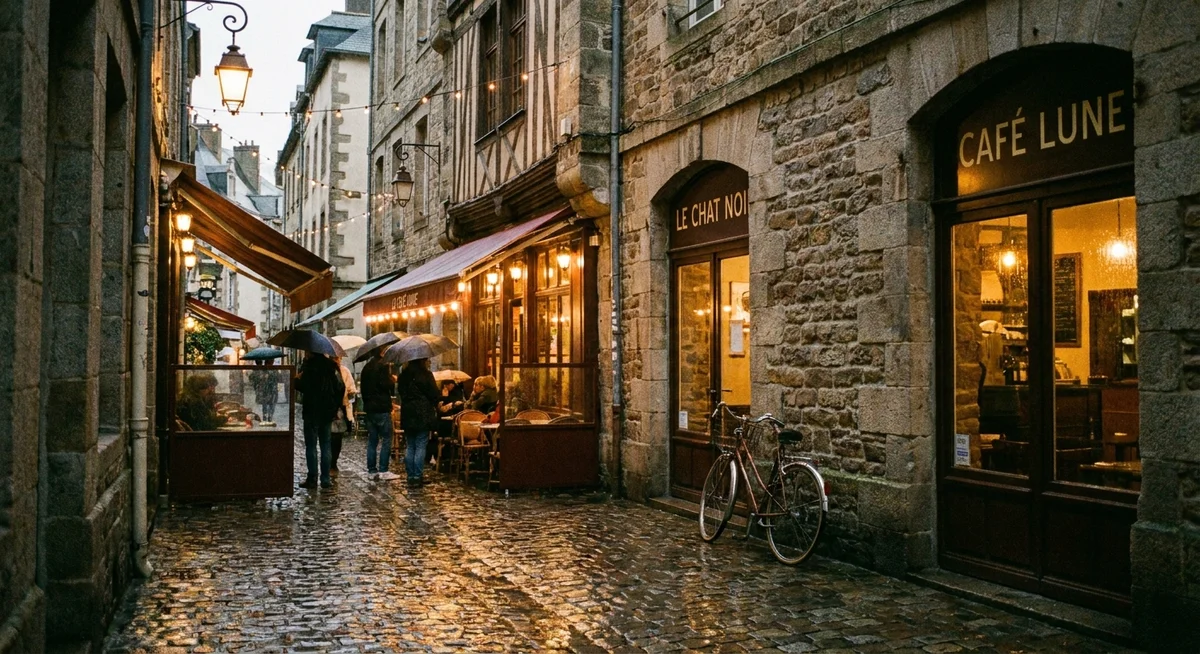
Why Fictional Worlds Make Photos Better, Not Worse
There's a fair question hiding under all this. If the character isn't real, and the photo isn't of a real person, what's the point?
The point is exactly that. Because the whole thing is fictional by design, the photos aren't pretending to be something they're not. They're not scraped from someone's life. They're not deepfakes of a real person. They're pictures from a fictional world that both sides know is fictional.
That framing actually makes the whole experience feel healthier. Kintora leans into this by setting everything in a fictional city with its own neighbourhoods, its own vibe, and its own cast of characters who live there. The photos are extensions of that world. They're not trying to trick anyone. They're building out a place.
It's the difference between a novel with illustrations and a fake account pretending to be someone real. One is a creative experience with visuals that support it. The other is a mess. AI companion apps that get this right end up feeling more like the first one.
What to Look For in a Photo-Sending Companion App
If photos matter, and it turns out they do more than most people expect, there are a few things worth checking in any AI companion app.
- Consistency across time. Does the character look like themselves a week later? A month later?
- Consistency with their world. Do their photos match where they said they live and what they said they do?
- Natural pacing. Do photos come up in conversation, or does it feel like a feature being demoed?
- Memory that connects to photos. If they sent a photo of their kitchen last week, does that kitchen still exist this week?
- Clear framing as fictional. Is the app upfront that this is a fictional world with fictional people?
Get those right and photo messages stop being a novelty. They become one of the main reasons the chat feels like an actual thread with an actual person, even when everyone involved knows the person lives in a city that doesn't exist.
The Small Thing That Turns Out to Be a Big Thing
Photos in AI companion apps sound like a small feature. A nice extra. Something to try once and then forget about.
In practice, they end up doing something bigger. They give a character a face that stays the same. They give a fictional city a look. They turn a chat history into a slow, casual scrapbook of a friendship that keeps going.
That's the quiet upgrade that's happening across the better AI companion apps right now. Not louder features. Not flashier interfaces. Just the steady accumulation of small moments, one photo at a time, from someone who keeps showing up as themselves.