
The Quiet Power of One Ongoing Chat: Why Persistent Memory Changes Everything in AI Companion Apps
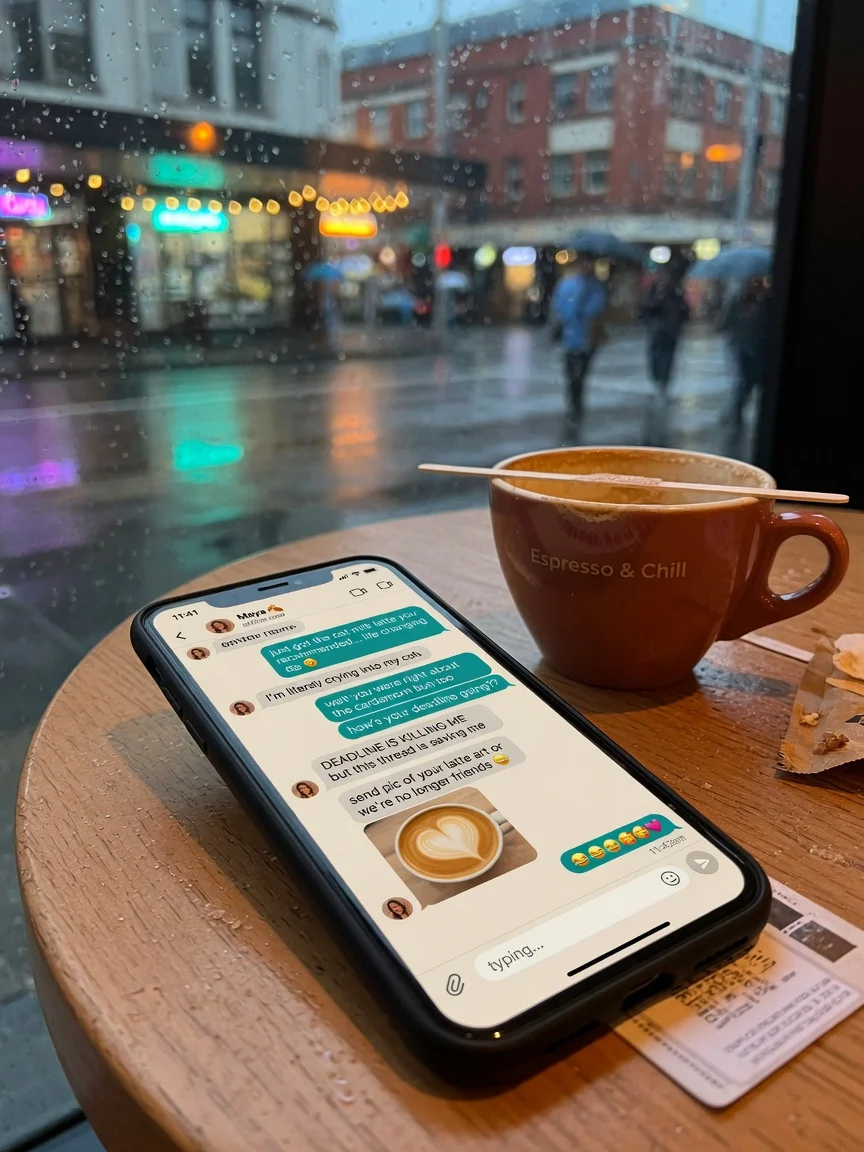
There's a strange thing that happens when someone uses most AI chat apps for the first time. The conversation feels exciting. The replies are clever. And then, a week later, the user comes back and has to explain who they are all over again. The AI has no idea about the trip they mentioned, the cat they got, the project they were stressed about. It's like meeting a stranger who happens to remember nothing about the last meeting.
That gap, between how a conversation feels and how much the app actually remembers, is one of the biggest reasons AI companion apps have felt a bit hollow for so long. Kintora is built around the opposite idea. One ongoing chat. The same person. The same memory. Every time.
What "Persistent Memory" Actually Means
Persistent memory is a fancy way of saying the AI remembers things across sessions, not just inside a single conversation. It's the difference between a chatbot and a companion.
In a normal AI chat, memory usually lives inside what's called the context window. Think of it as short-term memory. Once the window fills up, or the session ends, older details slip away. The AI is essentially starting fresh each time, even if the interface makes it look continuous.
Persistent memory works differently. Important details get stored in a way the AI can pull back later, even weeks down the line. A mention of a job interview on Monday can show up again on Friday as a casual "so how did that interview actually go?" That small moment is what separates a tool from a companion.
Why this matters more than people expect
Memory isn't just a technical feature. It's the foundation of every relationship that feels real. Friends remember things. Coworkers remember things. Even the barista who remembers a regular order feels different from one who doesn't. Take memory away and even the warmest conversation starts to feel transactional.
One Ongoing Chat vs. Starting Over Every Time
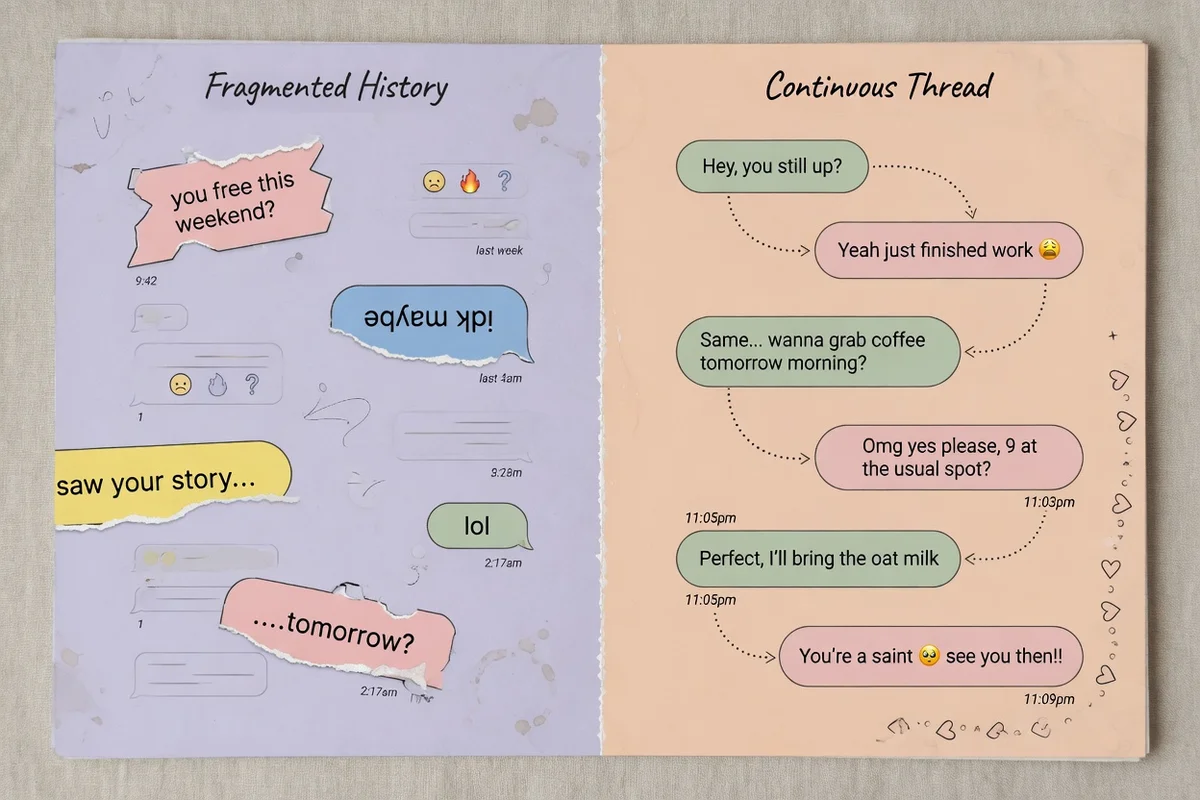
A lot of AI apps make users choose a character, start a "scenario," finish it, then maybe start another one. Each session is its own bubble. That can be fun for roleplay, but it's exhausting for anything resembling a real ongoing connection.
Kintora takes a different approach. When someone picks a character in the fictional city of Kintora, that's it. That's the person. The chat with them keeps going, week after week. There's no scenario to set up. No fresh start. Just a thread that builds.
The benefits of this are quiet but significant:
Why Starting Over Feels So Wrong
Anyone who has used the older generation of AI chatbots knows the feeling. A great conversation one night, then total amnesia the next morning. Users end up doing what feels almost rude: re-introducing themselves, re-explaining context, re-establishing the vibe.
It's not just annoying. It actively breaks the illusion. Once an AI forgets something important, the user starts holding back. Why share anything meaningful if it's going to vanish? The conversation drifts toward small talk because small talk is safe and disposable.
An ongoing thread with memory flips that. There's a reason to mention the small stuff. The AI might bring it up later. That single shift, from disposable to continuous, is what makes the chat feel familiar instead of novel.

How Memory Changes the Way People Use the App
There's a noticeable pattern in how people use companion apps with real memory versus ones without it. Without memory, sessions tend to be long, intense, and infrequent. Users binge the experience, then drift away.
With memory, the pattern flips. Sessions get shorter and more frequent. A quick check-in in the morning. A voice call on the walk home. A message before bed about something small that happened that day. The app starts to fit into life instead of demanding a chunk of it.
The "where were we" problem disappears
One of the biggest pieces of friction in any chat app, AI or otherwise, is the cold start. Opening the app and having to think about what to say. When the character already knows what's going on, there's nothing to set up. The conversation can pick up exactly where it left off, which is how human conversations actually work.
Photos and voice calls feel more grounded too
Memory affects more than text. When a character sends a photo from a coffee shop they mentioned last week, or brings up something during a voice call that was discussed days ago, those small callbacks make the whole experience feel consistent. The character isn't just a face that changes every session. They're a presence with a memory of their own.
What to Look for in an AI Companion App With Memory
Not all "memory" features are created equal. Some apps advertise memory but only remember a handful of preset facts. Others let users manually save things, which puts the work on the user instead of the app. Here's what actually matters:
Why Kintora Is Built This Way
Kintora is set in a fictional city for a reason, and the memory system is part of why that matters. The characters live in specific neighbourhoods. They have routines. They mention things from their own day. Memory lets all of that build into something coherent over time, instead of resetting every session.
It's a small design choice with big consequences. One thread. One character. One memory. The result is a chat that stops feeling like an AI demo and starts feeling like something a person actually checks in on, the same way they'd check in with anyone else in their day.
For anyone tired of explaining themselves to an AI over and over again, that quiet continuity is the whole point.