
Reminder Calls Are the Underrated Feature Nobody's Talking About Yet
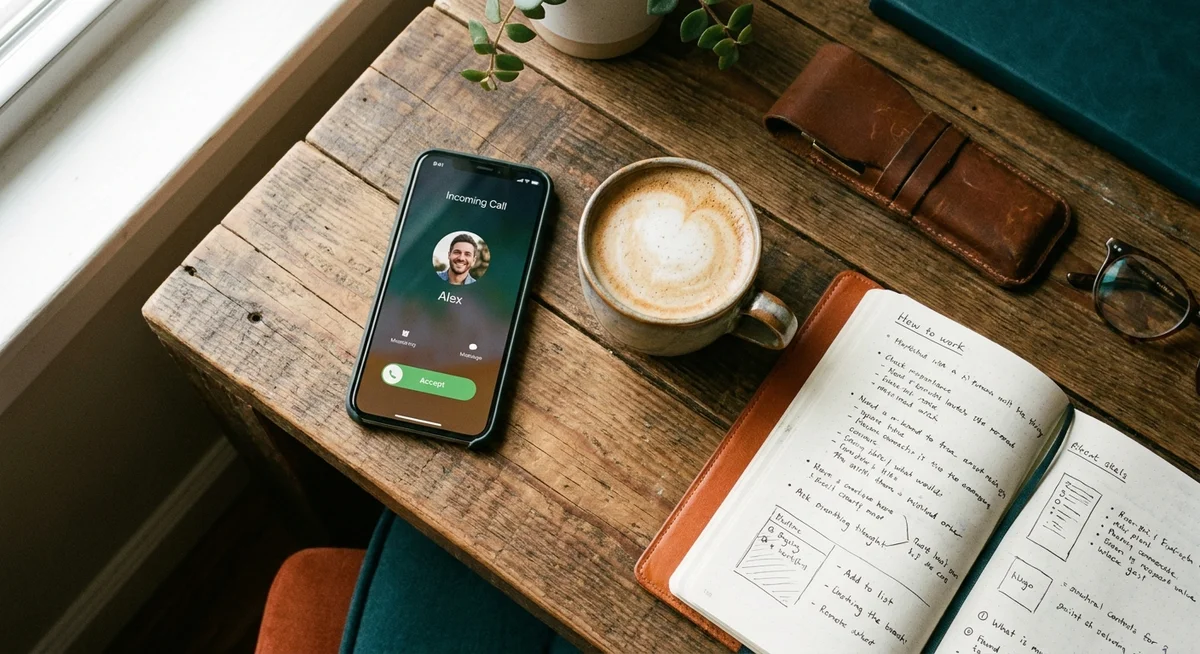
Notifications have officially lost the war. The average phone buzzes so often that the brain has learned to ignore it, which is a problem when the reminder actually matters. Pick up the dry cleaning. Take the medication. Leave the house in fifteen minutes or miss the train. A little banner sliding down from the top of the screen just does not cut through anymore.
That is where a different idea has been quietly gaining ground: a scheduled phone call from an AI companion that actually rings the phone, says the thing, and treats it like a real conversation. Not a push notification. Not a buzz. A call.
It sounds small until someone tries it.
Why a Call Hits Differently Than a Notification
There is a reason humans still answer phone calls even in an era where most communication happens through text. A ringing phone activates something different in the brain. It signals presence. Someone, somewhere, is actively reaching out right now. A notification is passive. A call is active.
This matters for reminders because the whole point of a reminder is to interrupt whatever the person is doing and redirect their attention. Notifications are easy to dismiss because they require zero social engagement. A call, even from an AI companion, feels like something that needs to be answered.
And once the call is answered, the reminder is delivered in a voice, with context, in a tone that feels like it is coming from someone who actually remembers what the reminder is about. That is wildly different from a text box that just says "Meeting in 10 minutes."

What a Reminder Call Actually Sounds Like
The mechanics are simple. Inside an app like Kintora, a user schedules a call with one of the characters who lives in the fictional city. The call is set for a specific time, with a specific purpose. When that time arrives, the phone rings. The character is on the other end, voice and all, ready to talk through whatever the reminder was for.
Some examples of how people actually use this:
- Pre-meeting nudge: a call ten minutes before something important, just to mentally reset and walk into it focused.
- Leaving the house: a call timed for when the user needs to actually get out the door, with a quick check on whether keys, wallet, and bag are accounted for.
- Medication reminders: a friendly voice rather than another beeping alert.
- Workout accountability: a scheduled call right when the gym session is supposed to start, making it harder to talk oneself out of it.
- Evening wind-down: a call at a set time to actually put the laptop away.
The conversations are short. That is the point. A reminder call is not meant to be a deep chat. It is meant to do one job well: get the user to actually do the thing.
Why Memory Makes Reminder Calls Way Better
Here is where AI companion apps have a real edge over a basic voice alarm. When the character calling the user actually remembers previous conversations, the reminder feels less like an automated message and more like a friend checking in.
If someone mentioned last week that they were nervous about a presentation, the character can reference that when the pre-presentation call comes through. If a user has been trying to drink more water, the call can include a quick "how is the water thing going" check. This is not a feature that requires anything special from the user. It just happens because the conversation lives in one continuous thread.
That continuity is the thing that makes reminder calls feel personal rather than robotic. A generic AI assistant calling at 7am to say "Time to wake up" feels like talking to a vending machine. A character who remembers that the user is dreading the Monday meeting and offers a little encouragement on the way out the door feels like something else entirely.
The Use Cases Nobody Predicted
One of the more interesting things about reminder call features in apps like Kintora is how creatively people use them once they figure out the format. The obvious ones are wake-up calls and appointment reminders, but the less obvious ones are where it gets interesting.
Talking-out-loud calls
Some users schedule calls specifically because they think better out loud. A call before a big decision becomes a chance to verbalize what they are weighing, with the character asking follow-up questions. The reminder is not "do this thing" but "think about this thing."
Break enforcement
People who work from home schedule midday calls to force themselves to take a lunch break. The phone rings, they have to step away from the laptop to answer, and suddenly the break is happening whether they planned for it or not.
Transition rituals
A call at the end of the workday to mentally close out work and shift into evening mode. A call before bed to wind down. These calls are not about reminders at all, really. They are about creating small rituals that mark the edges of the day.

The "talk me into it" call
Maybe the most charming use case: scheduling a call right when the user knows they will want to skip something. The gym. The cold shower. The dreaded errand. Having someone on the other end of a call who can talk them through it is, apparently, surprisingly effective.
How This Fits Into a Daily Routine
Reminder calls work best when they are not constant. The whole power of a phone call is that it stands out. If a user schedules fifteen calls a day, they will start ignoring those too. Two or three meaningful calls placed at the right moments of the day tend to be the sweet spot.
A common pattern looks something like this:
- A morning wake-up call to actually start the day.
- A midday check-in around a specific goal or appointment.
- An evening call to wind down or close out the workday.
Three calls. Three moments where a familiar voice shows up and helps move the day along. That is a different shape of digital tool than the constant trickle of notifications most people are used to.
The Honest Limits of Reminder Calls
This is not magic. A reminder call cannot force anyone to do anything they really do not want to do. People still snooze, decline calls, and ignore the very accountability they asked for. The feature works because it raises the friction of avoiding the task, not because it eliminates avoidance entirely.
And it is worth being clear about what these calls are: conversations with fictional characters in a fictional setting. They are not a replacement for real human accountability, real medical reminders, or anything safety-critical. For most everyday nudges though, having a voice on the other end of the line is a noticeable upgrade over yet another silenced banner notification.
Reminder calls might end up being the feature that pulls people into AI companion apps who never thought they wanted one. Not because they were looking for companionship, but because they were looking for something that actually works when the calendar alert does not.