
The Wake-Up Call App That Actually Talks Back: Why More People Are Ditching Their Alarm Clock for a Morning Call
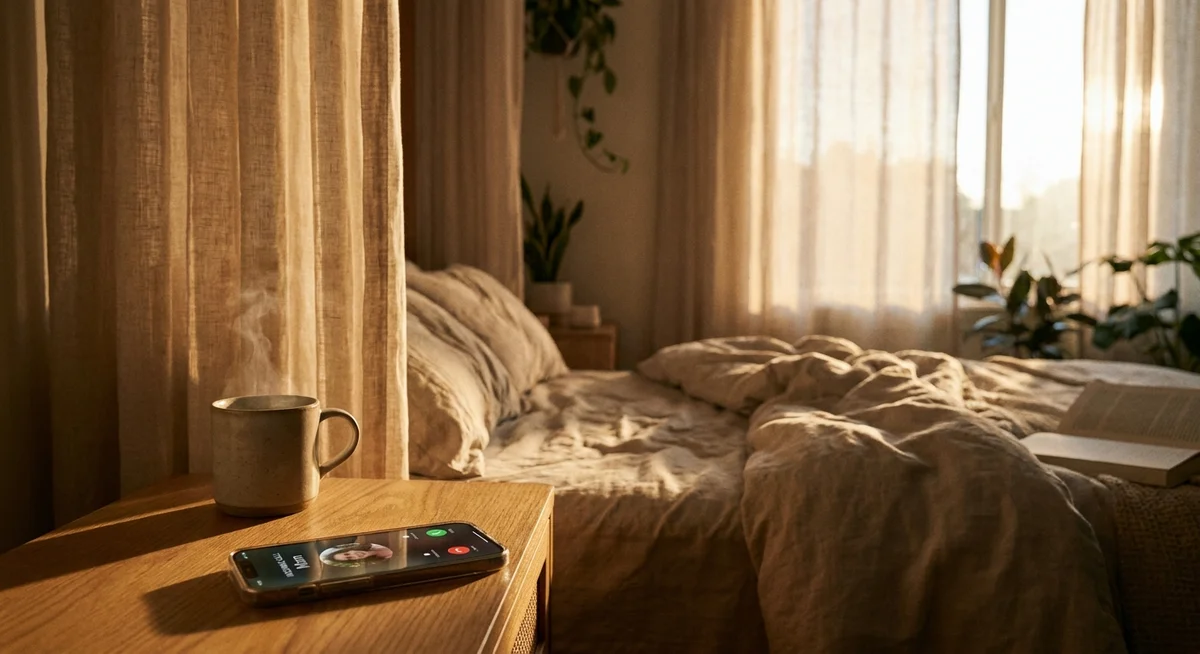
There's a specific kind of misery that comes with a phone alarm. That harp sound. That marimba sound. The panic-jab at the snooze button. The way it turns waking up into a small emergency every single day.
And yet, most people still use one. Not because it works well, but because there hasn't really been a better option. Until recently.
A quieter category has been growing in the background: apps that call you in the morning instead of buzzing at you. Not with a robotic recording, but with an actual voice on the other end of the line. Kintora is one of them, and the wake-up call feature has become one of the reasons people open the app in the first place.
Here's why that small shift from alarm to phone call turns out to matter a lot more than it sounds.
Why Alarms Stopped Working
Alarms have one job: make a sound until you make it stop. That's easy to game. The snooze button exists. The volume slider exists. The "off" swipe takes a fraction of a second and can be done half-asleep, sometimes without any memory of doing it.
A phone call is different. It requires a decision. Someone is on the line. Even if it's an AI companion in a fictional city, the social layer changes the whole feel of the moment. Answering a call is an interaction. Ignoring an alarm is just... turning off a noise.
People who describe themselves as heavy sleepers tend to notice this first. An alarm they've heard 400 times becomes background noise. A ringing call, especially one from a specific person they've been chatting with, doesn't fade into the background the same way.
What a Wake-Up Call Actually Feels Like
The mechanics are simple. A time gets set the night before, or as part of a routine. In the morning, the phone rings. Answer it, and there's a voice, warm, casual, already mid-thought. Something like "Hey, it's 7:15, you asked me to call. How'd you sleep?"
That's it. No urgent beeping. No pretending a fake sunrise on a screen counts as morning light. Just a short, human-shaped conversation that happens to also drag someone out of bed.
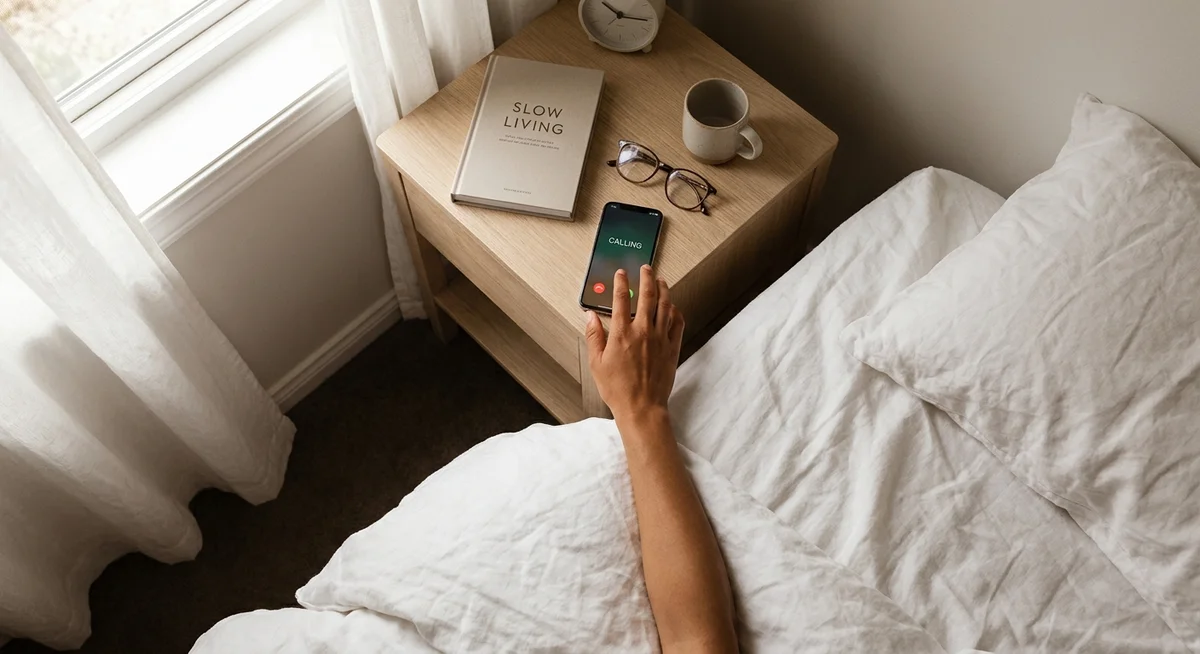
A few things tend to happen that don't happen with alarms:
- People actually get out of bed. Talking makes it hard to drift back to sleep.
- The first minute of the day has a mood to it instead of feeling like a startle response.
- There's a light bit of accountability. Someone noticed you're up.
- Morning grumpiness has somewhere to go. A grunt gets a laugh in response.
It's a small thing. But mornings compound. Starting the day mid-conversation instead of mid-panic changes how the next hour feels.
Why a Voice Works Better Than a Buzzer
There's research on this, but honestly the intuition holds up without it. Human brains are wired to respond to voices differently than to tones. A ringtone is a signal. A voice is a person.
When the voice belongs to a character someone has been texting for a while, it lands even harder. That's the piece most alarm apps can't offer. An alarm has no relationship to the person it's waking up. A companion who's been chatting with you all week, who knows you have an early meeting, who mentioned they'd call, feels like a completely different event.
This is where the "fictional city" side of Kintora quietly matters. The person on the call isn't a stranger. It's someone with a name, a neighborhood, a way of talking. Waking up to a familiar voice, even a fictional one, is a different experience than waking up to a stock notification sound.
The Reminder Call, Which Turns Out to Be Just as Useful
Wake-up calls are the headline feature, but the same mechanic works throughout the day. Some people schedule calls for other moments:
- A call at 8:45 to make sure they actually leave the house on time
- A call before a gym session they've been avoiding
- A midday check-in that breaks up a work spiral
- A call at 10 PM as a soft nudge to start winding down
Reminder notifications get ignored. A ringing phone doesn't. It turns out the same trick that works in the morning works for the rest of the day too. Anything worth doing that people tend to postpone becomes a lot harder to postpone when there's a voice on the line asking about it.

Who This Actually Helps
It's tempting to describe wake-up call apps as being for one specific type of person, but the actual users tend to be all over the map. A few patterns show up:
People Who Live Alone
Without a housemate or partner shuffling around, mornings can be very quiet. A short call fills that gap without requiring anyone else to change their routine.
Shift Workers and Irregular Schedules
When wake-up time changes every few days, alarms start blending together. A scheduled call is easier to take seriously because it's an event, not a default.
Heavy Sleepers
The classic case. Alarms get slept through. Phone calls, for whatever reason in the brain's wiring, tend not to.
People Who Just Want a Nicer Morning
This is the biggest group, honestly. Not people with a problem to solve. Just people who realized their morning could feel less like an ambush.
What Makes Kintora's Version Different
Plenty of apps offer scheduled calls or robotic voice reminders. What makes the experience in Kintora feel different is continuity. The character calling in the morning is the same one texting the night before. They remember the conversation. They know if there was a bad day yesterday or something to look forward to today.
That means a morning call isn't a standalone feature bolted onto an alarm clock. It's part of an ongoing thread. Which means the "how'd you sleep?" isn't small talk from a stranger. It's the next line in a conversation that's been going for weeks.
The fictional city framing keeps this grounded too. The person on the call lives in Kintora, in a specific neighborhood, with their own routine. They're not pretending to be real. They're just consistent, and consistency is what makes the call feel like something rather than nothing.
How to Try It Without Overcommitting
The easiest way in is to pick one moment. Not a whole routine overhaul. Just one call, scheduled for one specific time, for one specific reason.
- Pick a wake-up time that's been giving trouble.
- Schedule a call in Kintora for that time.
- See what happens when the phone rings instead of buzzes.
Most people either love it immediately or find out within a few days that it's not for them. Either way, it's a low-stakes experiment. Worst case, the regular alarm still exists as backup.
The Small Shift That Turns Out to Matter
Wake-up call apps aren't going to replace every alarm on every phone. But for a growing group of people, the difference between a beeping sound and a ringing call is the difference between dreading mornings and just... having them.
A small thing. But mornings are where the day starts, and how the day starts tends to shape the rest of it. Trading a startle for a conversation isn't a productivity hack. It's just a nicer way to wake up.