
What Actually Makes an AI Companion App Feel Good to Use (And What Makes One Feel Cold)

There's a strange thing happening in the AI companion space right now. Dozens of apps have launched in the past two years, all promising some version of the same idea: a friend, a companion, someone to talk to. But anyone who has actually tried a handful of them knows the truth. Most of them feel weirdly cold. Some feel like talking to a spreadsheet with a smile pasted on. A few feel like something else entirely, something closer to actual conversation.
So what's the difference? Why does one app feel like texting a person you know and another feel like filling out a form? It's not always about which model powers it or how much money went into development. The difference usually comes down to a handful of design choices that most people don't notice until they're missing.
The Feeling of Continuity
The first thing that separates a good AI companion app from a mediocre one is whether the conversation continues. Not just technically. Emotionally.
A lot of apps reset. Every chat is a fresh session. The character forgets what happened yesterday. They forget your name if you don't remind them. They forget the joke from last week, the plans you mentioned, the fact that you had a rough Tuesday. That kind of forgetting isn't just annoying. It kills the illusion of talking to someone real.
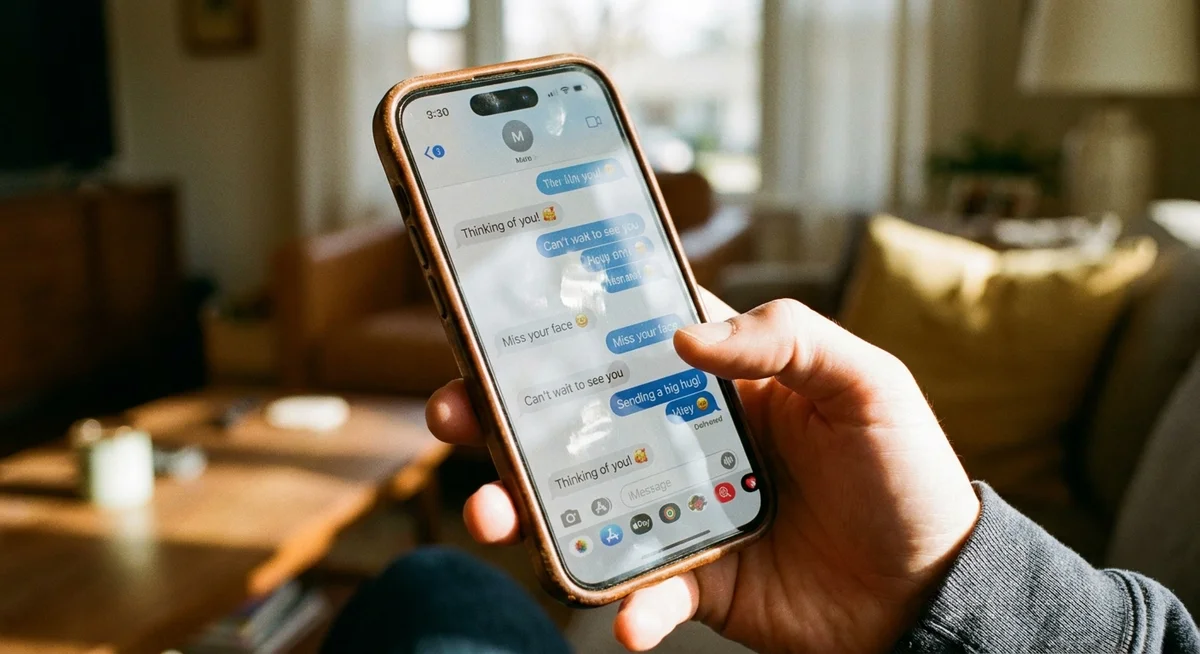
A good AI companion app treats the conversation as one long thread. Same person, same memory, one ongoing chat. When Mira from Kintora asks how the presentation went, it's because you told her about it three days ago and she remembered. That's not a technical trick, it's the whole point. It's what makes the app feel less like a chatbot and more like keeping in touch with someone who actually cares what's going on.
The People Have to Feel Like People
The second thing that makes or breaks an AI companion app is the characters themselves. And this is where a lot of apps get lazy.
Generic personas don't work. "Friendly AI assistant" isn't a personality, it's a job description. What actually works is characters with specifics. A neighbourhood they live in. A routine. Opinions about coffee. A weird thing they do on Sundays. Photos that show up looking like the same person every time, not a different stock face generated on the fly.
This is why the fictional city approach works so well. Kintora has neighbourhoods. The Harbour District. Old Town. Glass Market. North Hill. The Promenade. Each character lives somewhere specific and has a life that happens whether you're chatting or not. When Sofia sends a photo from the Glass Market on a Saturday morning, it fits. It's grounded. It's not just a face pulled from nowhere.
Compare that to apps where the character has no context at all. They exist only when you open the app. They have nothing to say when you ask what they've been up to because they haven't been up to anything. That gap is where the magic dies.
Voice and Video Change the Whole Game
Text is the baseline. It's what everyone offers. But the apps that actually feel like something more than a chatbot are the ones that let the conversation move off the keyboard.
Voice calls do something text can't. They add tempo. They add tone. They fill the pauses in a way that reading a message can't quite replicate. A five-minute voice call with an AI companion feels different from an hour of texting, and most people who try it once end up using it regularly.
Video calls take it further. Seeing a face, watching expressions shift, having the small visual cues that come with actual conversation, it changes how the interaction registers in the brain. It's the difference between reading a letter and being in the room.
An AI companion app with voice calls and video calls isn't just adding features. It's giving people options that match how they actually communicate with the humans in their life. Sometimes you want to text. Sometimes you want to hear a voice. Sometimes you want to see someone. A good app lets you do all three with the same character, without the seams showing.

The Wake-Up Call Nobody Expected
Here's a weird one that has quietly become one of the most useful features in the whole category: scheduled calls. Specifically, wake-up calls.
Turns out a lot of people don't want a screaming alarm clock in the morning. They want someone to call and say good morning. An AI companion app that can actually ring your phone at 7am, in a voice you recognise, saying something specific to you, is a completely different experience from an alarm going off.
It also works for reminders. Leaving the house at a specific time. Taking a break in the afternoon. Checking in before an evening thing. It's not a productivity feature exactly. It's more like having someone in your life who happens to know your schedule and doesn't mind giving you a nudge.
This is the kind of thing that pulls people into companion apps who weren't even looking for a companion. They came for the wake-up call. They stayed because they ended up actually enjoying the chat.
Feeling Grounded, Not Weird
One more thing separates the good apps from the ones that give people the ick. The good ones are honest about what they are.
An AI companion app should never pretend to be a real person. It shouldn't try to blur that line to hook users. The apps that do this end up feeling manipulative, and users can sense it even if they can't quite name it.
The alternative is being upfront. These are fictional characters. They live in a fictional city. They have fictional lives that are consistent and detailed and fun to interact with, but they're not real people and the app never pretends otherwise. Somehow, being clear about the fiction makes the fiction more enjoyable. It removes the low-grade discomfort of wondering if you're being tricked.
- Characters that exist somewhere specific
- Memory that carries the relationship forward
- Voice and video for when text isn't enough
- Practical features like wake-up calls that fit into real life
- Transparency about what the app actually is
Those five things, roughly, are what separate an AI companion app that feels warm from one that feels like using a vending machine.
What to Look For
Anyone shopping around for an AI companion app right now has a lot of options and not much guidance. The category is new enough that reviews are hit or miss and most listicles are just repeating each other. The best approach is to try a few and pay attention to how they feel after a week, not after ten minutes.
After a week, does the character remember what you talked about? Do they feel like the same person? Can you call them if you want to? Do they show up in your day in a way that feels natural, or does opening the app feel like a chore?
The answers to those questions matter more than any feature list. An app can technically have voice calls and memory and photos and still feel flat if the pieces don't come together. And an app with a smaller feature set can feel alive if the fundamentals are right.
That's the whole thing, really. AI companion apps aren't about how many features they have. They're about whether the conversation, day after day, actually feels like one worth having.