
What Actually Makes a Good AI Companion App in 2025? A Practical Breakdown

There are probably a hundred AI companion apps in the app stores right now. Most of them look pretty similar on the surface: a friendly avatar, a chat window, maybe a voice feature tucked into a menu somewhere. But after using a few of them for more than a week, the differences start to show up fast. Some feel like talking to a real person. Some feel like filling out a form.
So what actually makes one of these apps work? Not in a marketing way, but in a "this is something I'd actually open tomorrow" way. The answer is a mix of small things that add up, and most of them have nothing to do with how impressive the underlying AI sounds in a demo.
Memory is the whole game
The biggest difference between a chatbot and a companion app is whether the thing remembers anything. Sounds obvious, but a surprising number of apps still reset the conversation every session, or only remember a handful of facts pulled from a settings page.
That's a problem because real relationships, even casual ones, are built on shared history. If someone has to be reminded every Monday that you've been trying to quit coffee, they're not really a friend. They're a help desk.
The apps that feel different are the ones where everything carries forward. The book that was mentioned last Tuesday, the name of the cousin who's visiting, the running joke about the neighbour's dog. One continuous thread, not a series of clean slates. Kintora was built around this idea specifically. There's one ongoing chat with each character, and it just keeps going.
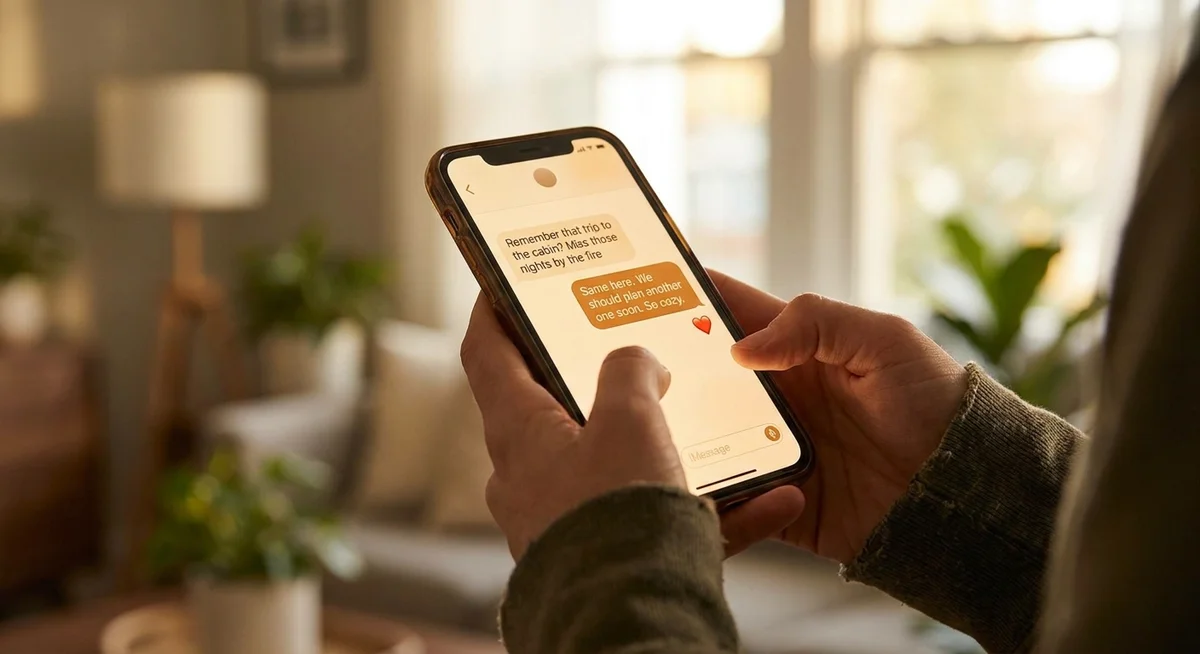
Why "starting over" ruins the feeling
Anyone who has used a generic chatbot knows the feeling of having to re-explain themselves. It's not exhausting in a big way, but it's deflating in a small one. Every new session is a tiny audition. Companion apps that solve this problem feel exponentially more relaxing to use, because the relationship is always picking up where it left off.
Voice and video change the tone completely
Text is great. Text is where most conversations live. But there's a reason people still call their friends sometimes instead of just messaging. Voice carries warmth, pacing, hesitation, all the stuff that flattens out when it becomes pixels on a screen.
AI companion apps that support actual voice calls, not just text-to-speech playback, feel meaningfully different. The conversation becomes something you can do while walking, cooking, or driving. It becomes ambient instead of focused.
Video adds another layer. It's not necessary for everyone, but for the moments when text feels too thin, seeing a face changes the whole interaction. A good companion app treats voice and video as first-class features, not gimmicks bolted onto a chat box.
The walking-around test
A simple way to evaluate any companion app: can it hold a normal voice conversation while you're out for a walk? If yes, it's doing something right. If it requires you to sit and stare at a screen the whole time, it's basically a fancier version of texting.
Consistent identity beats clever prompts
Some apps lean hard on customization. Build your own character, write a detailed personality prompt, choose between forty-seven voice options. That sounds appealing until people actually try it, and realize they don't really want to be the writer. They want to be the friend.
The apps that feel more natural tend to go the other direction. The characters are already there. They have names, neighbourhoods, hobbies, opinions about coffee. They send photos that actually look like them, not a different stock image every time. They have a consistent vibe across conversations.

This is part of why Kintora puts its characters in a fictional city. Each person has a place they live, a routine, a corner of town they hang out in. That grounding makes the conversations feel more like checking in with someone who has a life, instead of summoning a generic chat partner from nowhere.
The little features that actually get used
A lot of companion apps stuff their feature lists with things that sound impressive in a screenshot but never get used in practice. The features that actually matter tend to be smaller and more practical.
- Scheduled calls. Being able to ask a character to call at a specific time, whether that's a wake-up call or a reminder before leaving the house, turns the app into something useful, not just entertaining.
- Photo messages. Not as a novelty, but as something a character can send from their day. A quick shot from the harbour, a coffee on a rainy morning. It makes the persona feel like it exists somewhere.
- Cross-device continuity. Start a chat on the web, continue it on iPhone, no awkward sync issues. This sounds basic but a lot of apps still get it wrong.
- First messages. Companion apps where the character sometimes reaches out first feel a lot more alive than ones where the user has to initiate every single interaction.
Wake-up calls are an underrated feature
This one is worth singling out. A regular alarm is easy to ignore. A voice on the phone calling at 7am is harder to swipe away. People who switch from a standard alarm to a scheduled call from an AI companion tend to keep using it, because it works. It's also a use case that has nothing to do with companionship in the romantic or emotional sense. It's just a practical thing the app happens to be good at.
Tone, transparency, and not being weird
There's a category of AI companion app that leans heavily into romance, vulnerability marketing, or implied realness. That stuff makes a lot of people uncomfortable, and for good reason. A good companion app is upfront about what it is. The characters are fictional. The conversations are casual. The setting is clearly imaginary.
This is actually a feature, not a limitation. When the boundaries are clear, people relax. They can have a normal chat without worrying about what they're participating in. The apps that try to blur the line between fictional and real tend to feel a little uneasy after a while, even when the conversations themselves are pleasant.
Kintora's whole framing is built around this. A fictional city, fictional people, clear about being fictional. The point is the conversation, not the illusion.
So what does "good" actually look like?
Pulling it all together, a good AI companion app in 2025 probably has most of the following:
- One ongoing chat per character with real memory, not session resets.
- Voice calls that work while doing other things, and video for moments when text isn't enough.
- Characters with consistent identities, faces, and a sense of place.
- Practical features like scheduled calls and reminders that make the app useful outside of pure conversation.
- A clear, transparent stance on being fictional, without weird overpromising.
- Works smoothly across web and mobile without making the user think about it.
That's a pretty short list, but it's a list most apps don't hit. The ones that do tend to be the ones that stay on the home screen instead of getting buried in a folder after the first week. Whether that ends up being Kintora or something else, those are the things worth checking before committing to any AI companion app for more than a casual try.