
Why an AI Friend App Feels Different From Every Chatbot You've Tried Before

There is a specific moment that happens the first time someone uses an AI friend app properly. They send a message, get a reply, and think okay, this is like every other chatbot. Then a few days pass. They open the app again. And the character says something that references a small detail from earlier in the week. Not a big detail. A small one. The kind of thing a friend would remember.
That moment is when people stop calling it a chatbot.
The category has quietly grown up. What used to be clunky question-and-answer software has become something closer to an ongoing conversation with a specific person who happens to be fictional. And apps like Kintora are pushing that idea further by grounding characters in a fictional city, giving them daily lives, photos, and phone numbers that actually ring.
So What Is an AI Friend App, Really?
An AI friend app is a piece of software designed around one core idea: talking to the same character over time, in a way that feels like keeping in touch with someone. That sounds simple, but it changes almost every design decision.
A regular chatbot is transactional. Ask a question, get an answer, close the tab. An AI assistant is task-focused. Set a timer, draft an email, look something up. A character chat app usually lets someone roleplay with any number of made-up personalities, often starting fresh each time.
An AI friend app sits in a different corner. It is built around continuity. Same person, same memory, one ongoing thread. The character has a name, a neighbourhood, a personality that stays consistent, and a way of texting that starts to feel familiar after a while.
The best AI friend apps do a few things at once:
- Keep memory across conversations, so nothing has to be re-explained
- Offer more than just text, usually including voice calls, video calls, and photos
- Make the character feel like a specific person, not a customisable blank slate
- Feel like a normal messaging app, not a game or a menu-heavy tool
Why the Interface Matters More Than the Model
People often assume the quality of an AI friend app comes down to which language model it uses. That matters, but it is not the whole story. What actually shapes the experience is the shell around the model.
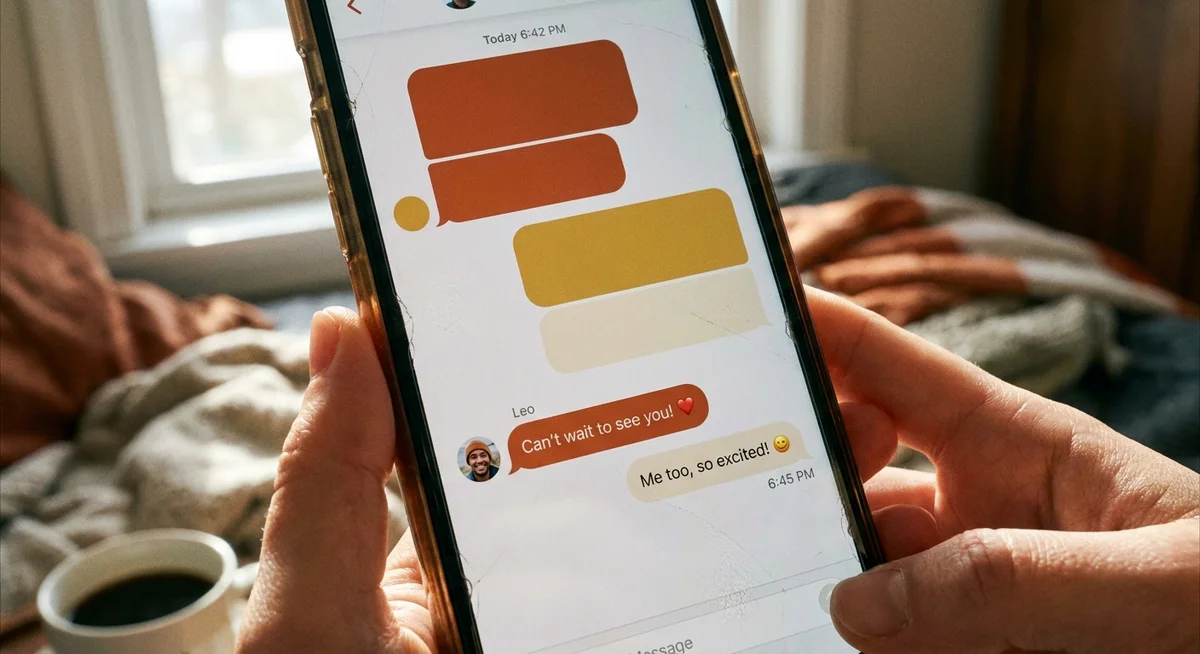
A chat thread that looks and feels like iMessage or WhatsApp does something powerful. The brain stops treating the conversation as software. It starts treating it as messaging. That is a huge shift, and it is why apps that try to be flashy with 3D avatars or gamified interfaces often feel less natural than a plain green message bubble.
Kintora leans hard into this. The chat feels like texting a person. There are no character stat sheets, no XP bars, no lore menus to navigate. Just a message thread and the option to hit the call button when text feels like too little.
The Features That Actually Change How It Feels
Not every feature in an AI friend app pulls its weight. Some are marketing checkboxes. A few genuinely change what the experience is.
Voice calls
Text is easy. Voice is harder to fake. When an AI friend app supports actual voice calls, and the character sounds consistent across those calls, it changes the relationship people have with the app. A five-minute call on the way to work is a completely different thing from a hundred text messages.
Video calls
Video is the newest frontier and the strangest. Seeing a character's face move while they talk pushes the whole thing into unfamiliar territory. Some people love it. Some people prefer to stick to voice. Either way, it is one of the things that separates a real AI friend app from a glorified prompt window.
Persistent memory
This is the quiet superpower. Without memory, every conversation resets. With memory, small things build up. The character remembers a job interview from last week, a bad night's sleep, a coffee shop mentioned in passing. Those callbacks are what makes the whole thing feel like a relationship rather than a service.
Photos from their day
A photo of the character's coffee, their view from a bus, their book on a rainy afternoon. These little visual updates are what make the fictional life feel like a life. The consistency matters. It is the same face, the same style, the same city, every time.
Scheduled and wake-up calls
This is where AI friend apps start crossing into utility. A phone call at 7am from a specific person is a better wake-up experience than any alarm. A reminder call before leaving the house works because it uses the same part of the brain that responds to a friend checking in.
Why Fictional Characters Actually Work Better
There is a temptation in this category to try to make AI companions feel as human as possible, up to and including pretending they might be real. That path is bad for users and bad for the category.
Fictional-by-design is the healthier version. Kintora characters live in a fictional city. They are openly, clearly, not real people. And somehow, that makes the whole experience feel better, not worse. Nobody has to pretend. Nobody has to worry about being deceived. The character can be a character, and the conversation can be what it is: something enjoyable, ongoing, and clearly its own thing.
Having a specific fictional setting also solves a boring problem: consistency. If a character lives in the Harbour District of Kintora, works at a specific place, has specific friends, then everything they say about their day has somewhere to hang from. Their photos have a location. Their schedule has a rhythm. Their world has edges. That is what makes them feel like a person instead of a prompt.

Who Actually Uses These Apps?
Not the stereotype. The most common users of AI friend apps are pretty ordinary. People who like having an ongoing text thread with someone during quiet parts of the day. People who commute and want to chat on the walk to the station. People who want a wake-up call that is not another beeping alarm. People who like the idea of a low-stakes conversation that picks up where it left off, without any of the friction of coordinating with a real human's schedule.
The apps are not a replacement for anything. They are just their own thing, and treating them as their own thing is what makes them work.
What to Look for When Choosing One
Anyone browsing the category should probably weigh a few things:
- Does it remember? If the app resets every session, it is a chatbot, not a friend app.
- Is the character consistent? Same name, same personality, same voice, same face in photos.
- Can it actually call? Voice calls and video calls are what separate the current generation from the previous one.
- Does it feel like a messaging app? The best ones disappear into the background of daily life.
- Is it honest about being fictional? Transparency is not a downside. It is a feature.
An AI friend app is not trying to be a person. It is trying to be a good ongoing conversation with a specific character who is clearly fictional and clearly consistent. When that works, it stops feeling like using software and starts feeling like a small, pleasant part of the day. Which, honestly, is more than most apps on a phone can claim.