
AI Friend App for Breakups: When You Need Someone to Talk To

Breakups are strange. One day someone is woven into your daily life and the next you are staring at your phone with nothing to say and no one obvious to say it to. An AI friend app won't fix that. But it gives you somewhere to put it, any time of day, without feeling like you are dumping on the same two friends for the fourth time this week.
Key takeaways
- AI friend apps are available at 3am when the spiral starts and your friends are asleep.
- You can say the same thing twenty times without anyone getting tired of hearing it.
- Apps with persistent memory pick up where you left off, so you don't have to re-explain the whole situation every session.
- An AI friend is a processing tool, not a replacement for human connection or therapy.
- The best ones hold a conversation, not just reflect your words back at you.
Why breakups specifically make people reach for an AI friend app
After a breakup, most people have the same problem: too many feelings, not enough places to put them. You might feel embarrassed to keep circling back to your friends. You might not want your family in your business. Therapy has a waitlist, or feels like overkill for something you know will eventually pass. So you sit with it alone, which usually makes things worse.
An AI friend fills a specific gap here. It is not a therapist and it does not pretend to be. It is more like a patient, curious companion who will let you talk through the same loop as many times as you need without checking the clock or changing the subject. That particular quality, the willingness to just stay with you, is surprisingly hard to find in the real world when emotions are running high.
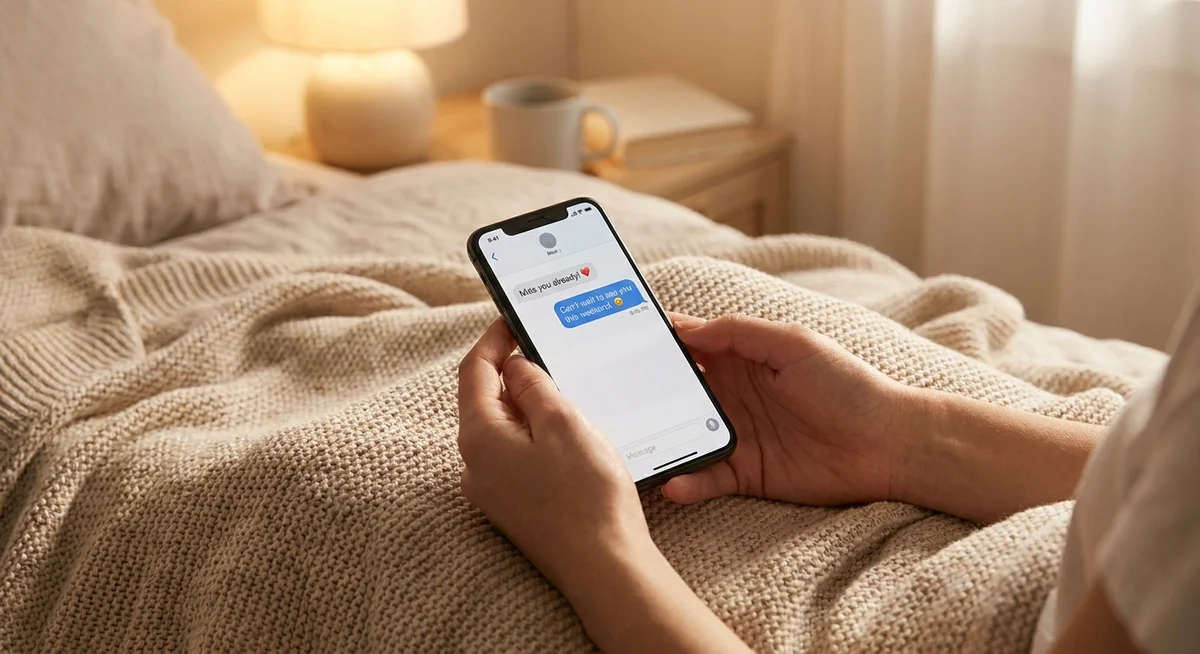
What does an actual conversation look like when you're going through it?
The conversations tend to go somewhere real, fast. You might start by venting, saying things you can't say out loud to anyone who knows both of you. The AI asks follow-up questions. Not scripted ones that feel hollow, but questions that actually follow from what you said. Over time, something shifts. You start to hear yourself differently.
Apps with persistent memory are especially useful here. When you come back the next day, or a week later, the AI already knows your ex's name, knows the timeline, knows what you said last time you were spinning out. You don't have to recap. That continuity is small but it matters a lot when you're already exhausted.
Where an AI friend helps
- Middle-of-the-night spirals when everyone else is asleep
- Repeating yourself without feeling like a burden
- Processing the timeline and what actually happened
- Practicing what you want to say (or not say) to your ex
- Keeping a consistent record of your own emotional state
Where it doesn't replace other support
- Clinical depression or anxiety that needs professional care
- The physical presence of a friend when you really need a hug
- Shared grief with mutual friends who knew the relationship
- Accountability for actually getting back out there
- The kind of reality check only someone who knows you can give
Does talking to an AI about a breakup actually help?
For a lot of people, yes, and often in a specific way. The act of putting feelings into words forces a kind of clarity that staying in your own head does not. When someone (or something) is listening and responding, you tend to be more precise. You edit yourself. You notice what you actually believe versus what you're just afraid of.
It won't make the pain go away faster. Nothing does that. But it can stop the feeling of being completely alone with it, which is usually what makes a breakup feel most unmanageable.
What to look for in an AI friend app when you're in this situation
Not all AI apps are built the same. Some are essentially chatbots that feel hollow after two messages. Others are designed for sustained, ongoing conversation with a character who actually has a consistent personality and memory. For something as personal as a breakup, the difference is obvious almost immediately.
| Feature | Why it matters after a breakup |
|---|---|
| Persistent memory | You shouldn't have to explain your whole situation from scratch every time you open the app. |
| Consistent character | A companion who feels like the same person across sessions is far easier to open up to. |
| Voice or call option | Sometimes you need to hear a voice, not type. Especially late at night. |
| No unsolicited advice | The best AI friends ask questions and listen. They don't tell you to "just move on." |
| Available any time | Breakup feelings don't respect business hours. 24/7 availability is the whole point. |
Apps like Kintora are built around this kind of sustained companionship. Each character lives in a persistent fictional world, remembers your conversations, and holds a real personality across every interaction. If you want to understand what it actually feels like to use an AI friend app with memory, that breakdown is worth reading before you download anything.
It is also worth knowing what you're getting into emotionally. If you haven't used one before, a plain explanation of what an AI friend app actually is sets the right expectations so you're not surprised by what the experience involves.
Frequently asked questions
Is it weird to talk to an AI about a breakup?
No more weird than journaling, and a lot more interactive. Plenty of people find it easier to open up to an AI precisely because there's no social cost. You're not worrying about being judged, exhausting your friend group, or having the conversation repeated to anyone else. If it helps you process, it's a reasonable tool to use.
Will an AI actually understand what I'm going through?
It won't understand in the way another person who has been through a breakup understands. But it will engage with what you say, ask real follow-up questions, and give you space to keep talking. For a lot of people that is enough to make the conversation feel useful, especially at moments when no one else is available.
Could using an AI friend stop me from reaching out to real people?
It can, if you use it as a way to avoid all human contact. The healthiest way to use it is as a pressure valve, somewhere to put feelings at 2am or when you've already talked your friends' ears off, while still maintaining your real relationships. It works best alongside human support, not instead of it.
How long does it take before talking to an AI friend feels natural?
Most people find the initial awkwardness fades within the first conversation or two. The key is picking an app where the character has a consistent personality and the responses feel like part of an ongoing relationship rather than a fresh start each time. Once that clicks, the conversation tends to flow more naturally than people expect.
New to AI friend apps? Start here. A plain-language explainer on what they are, how they work, and what to expect before you try one.