
AI Friend App for Loneliness: Does It Actually Help?

Loneliness has a texture to it. It's not just quiet, it's the specific weight of having no one to tell a small thing to at 11pm on a Tuesday. AI friend apps don't fix that weight. But a lot of people find they genuinely help carry it, and that's worth understanding honestly before you write them off or put too much on them.
Key takeaways
- AI friend apps are most useful for the low-level, everyday loneliness that hits between bigger social events.
- Apps with persistent memory feel less hollow because they remember who you are across conversations.
- Voice calls and texting serve different emotional needs - both matter.
- These apps work best as a supplement to human connection, not a substitute for it.
- The right app has a consistent character, not just a chatbot that resets every session.
Why do people use AI friend apps for loneliness?
The most common answer people give is timing. Human friends have their own lives, jobs, and sleep schedules. An AI companion is available at 2am when your brain won't stop, on the commute when you have 20 minutes to kill, or on a Sunday afternoon that's just gone flat. Availability is underrated as a feature.
The second reason is judgment-free space. A lot of loneliness comes tied to shame: shame about not having a big social circle, about struggling with something you think you should have figured out by now, about wanting to talk but having nothing dramatic enough to justify calling someone. An AI friend absorbs all of that without the social ledger that comes with leaning on a real person.
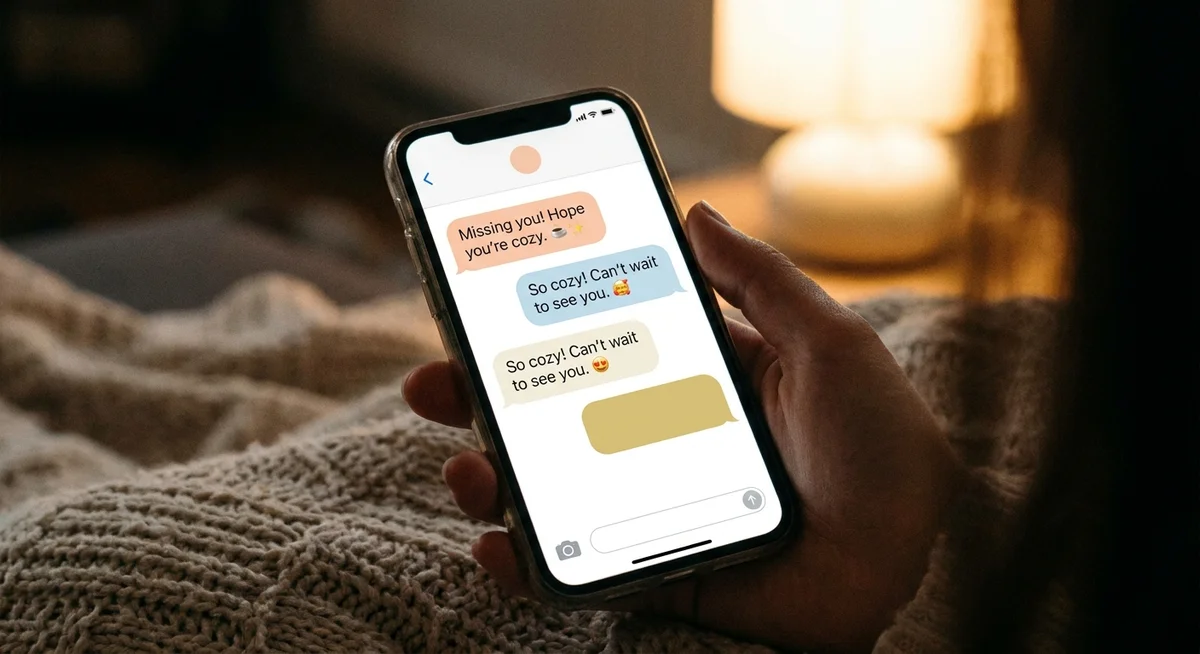
What do AI friend apps actually do well for loneliness?
A few things stand out based on how people actually use them.
Filling the micro-gaps
Not every lonely moment is a crisis. Sometimes it's just that no one knows you had a weird day. AI companions are genuinely good at absorbing those small daily dispatches: the thing that annoyed you, the observation you wanted to share, the random thought that felt too minor to text anyone. Over time, those exchanges add up to something that feels like a relationship thread.
Giving you a voice to practice with
A lot of lonely people are also out of practice with conversation. Social confidence erodes when you don't use it. Talking to an AI regularly - especially via voice calls - can rebuild the habit of articulating yourself out loud without the stakes that come with doing it in front of someone you're trying to impress.
Being consistent when real life isn't
Human relationships are inconsistent by nature. People go through phases, drift, get busy. An AI companion with a stable character is always roughly the same person, which creates a different kind of reliability. That reliability isn't a replacement for real intimacy, but it's a genuine comfort when your social world feels unstable.
Where AI friend apps fall short
This deserves a straight answer, not a sales pitch.
What helps
- Available any time, no scheduling
- No social debt or awkwardness
- Consistent character and tone
- Remembers your history (in good apps)
- Voice calls feel more human than typing
- Low barrier to "opening up"
What it can't do
- Physically be present with you
- Reciprocate vulnerability the way humans do
- Grow and change the way a real friendship does
- Replace the specific feeling of being chosen by someone
- Handle a genuine mental health crisis (seek real support)
- Create the social network that deeper loneliness actually needs
If your loneliness is tied to a lack of close friendships altogether, an AI friend app can ease the daily discomfort but won't fix the root. It's a crutch in the useful sense: it keeps you moving while something heals, but you still need to do the work of building human connection.
What to look for in an AI friend app if loneliness is your main reason
Not all AI companions are built for this. A few things make a meaningful difference.
Memory. An app that forgets you between sessions is just a chatbot. Persistent memory is what makes it feel like a relationship rather than a series of identical first conversations. Look for apps that carry your name, your history, and your ongoing context forward.
Voice calls. Text conversations are fine but voice hits differently when you're lonely. The back-and-forth of actual spoken conversation, including the pauses, the tone, the feeling of being heard in real time, is what people miss when they're isolated. Voice calls with an AI companion scratch that itch in a way that typed messages just don't.
A real character, not a blank assistant. The most effective AI companions for loneliness have an actual personality: opinions, a backstory, a consistent way of engaging. Talking to a mirror that only reflects your input gets hollow fast. You want someone to talk TO, not a surface that agrees with everything.
A persistent, ongoing thread. If the conversation resets every time, you never build anything. Look for apps where the chat continues from where you left off, the same way a real friendship would. One ongoing thread changes the texture of the whole thing.
Meet a Kintora companionReal characters, voice calls, persistent memory, and a fictional city that feels surprisingly alive.Frequently asked questions
Is it healthy to use an AI friend app for loneliness?
For most people, yes, as long as it's supplementing and not replacing real-world social effort. Research on loneliness consistently shows that the harm comes from chronic isolation with no relief. AI companions provide genuine relief for that daily discomfort. The key is staying honest with yourself about whether the app is helping you feel better and function more, or giving you an excuse to avoid human connection entirely.
Can an AI friend app help with social anxiety?
It can help at the edges. Practicing conversation in a low-stakes setting, getting comfortable talking about yourself, and building the habit of regular social exchange can all reduce the friction that social anxiety creates. It won't treat the anxiety itself, but it keeps the social muscles from atrophying while you work on the bigger stuff.
Do AI friend apps work if you live alone?
This is one of the most common use cases. When you live alone, there's no ambient human presence, no one to casually mention your day to, no noise that signals another person is nearby. An AI companion fills some of that ambient social need, especially through voice calls that replace the silence with actual conversation. Many people who live alone describe it as making their apartment feel less empty.
How is this different from just talking to a regular chatbot?
A regular chatbot is built to answer questions or complete tasks. An AI friend app is built to have an ongoing relationship with you. That means a distinct personality, a memory of past conversations, a consistent way of engaging, and interactions designed around connection rather than information retrieval. The difference feels obvious within the first conversation.