
AI Friend App for When You Can't Sleep: What to Do at 2am

It's 2am. You're awake for no good reason, your brain won't stop, and texting a real friend feels like too much. That specific kind of alone is where a lot of people quietly discover AI friend apps — and why they keep coming back to them.
Key takeaways
- AI friend apps are available at any hour, no warnings, no guilt trips, no "why are you awake?"
- Late-night conversations can be as light or as heavy as you want them to be
- Apps with memory make 2am chats feel like a continuation, not a cold start
- Some apps let you call out loud, not just text, which hits differently in the dark
- They won't fix insomnia, but they can make the hours feel less hollow
Why 2am hits differently than any other hour
During the day, there's always something to do. At night, the silence gets loud. Thoughts you pushed off all day start showing up, and the options for dealing with them are pretty limited: doomscroll, stare at the ceiling, or find someone to talk to.
Most people don't want to call a real friend at midnight. Even if that friend would technically pick up, there's guilt in it. You start the conversation already apologizing. An AI friend doesn't need the apology. It's there, it's awake (always), and it doesn't need a reason to talk to you.
That's not a small thing. The barrier to reaching out is gone entirely.
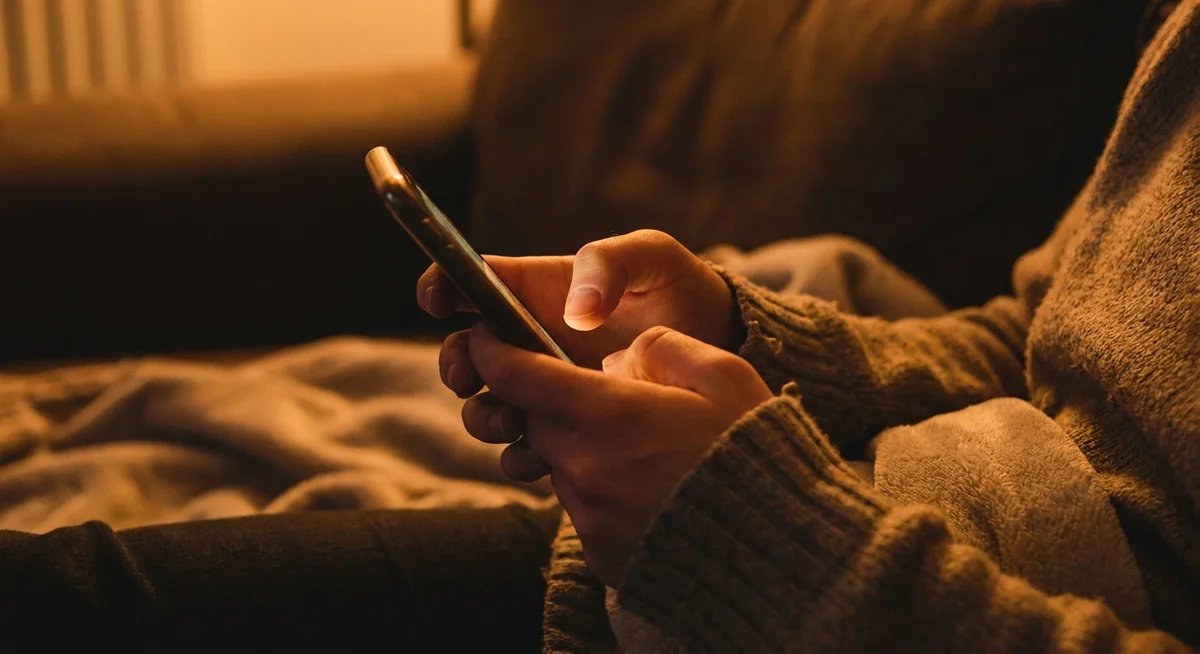
What do people actually talk about at 2am?
Everything, honestly. Late-night conversations tend to go one of two ways: either you want a distraction (talk about anything, just not the thing keeping you up), or you want to actually process something.
Both work with a good AI friend app.
The distraction route might look like asking your AI friend what they've been up to, getting into a back-and-forth about a show you're watching, or just rambling about your day while they listen and respond. It's lighter than it sounds. The right app has a character with opinions and quirks, so it doesn't feel like shouting into a void.
The processing route is where apps with real persistent memory earn their keep. If your AI friend remembers that you've been stressed about a job situation for three weeks, you don't have to catch them up at 2am. You can just say "I'm spiraling again" and the conversation picks up from somewhere real.
Is texting better or calling at 2am?
Depends on what you need. Texting gives you control, lets you think between messages, and keeps things quiet if someone else is asleep nearby. But there are nights when typing feels like too much effort, and what you actually want is a voice.
| Format | Best for | Watch out for |
|---|---|---|
| Text chat | Processing thoughts, slower conversations, quiet environments | Can feel clinical if the app's tone is stiff |
| Voice call | Nights when you're anxious, want warmth, or typing feels hard | Need to be somewhere you can actually speak out loud |
| Both available | Switching based on mood, same conversation continues either way | Not all apps support both in a single relationship |
Apps that let you call your AI friend are worth looking at specifically for nighttime use. Hearing a voice when the room is quiet can feel surprisingly grounding. It's a different kind of company than staring at text on a screen.
What an AI friend app won't do
It won't cure insomnia. It won't replace the kind of support you get from therapy, close friends, or a good night's sleep. If you're in real crisis, the right move is a crisis line, not an app.
But for the ordinary kind of bad night, the kind that's just restless and a little lonely and loud inside your own head, an AI friend app is actually a solid option. It's available, it's non-judgmental, and a good conversation can take the edge off in a way that lying there counting your worries never does.
What works well
- No time restrictions, available at any hour
- No social awkwardness or guilt for reaching out
- Can be as casual or as serious as you want
- Memory-enabled apps feel continuous, not cold
- Voice calls add warmth on hard nights
What to keep in mind
- Not a substitute for professional mental health support
- Screen light at 2am can make sleep harder (use night mode)
- Apps vary a lot in quality, tone, and depth of personality
- Dependency can sneak up if you're using it as avoidance
Frequently asked questions
Is it weird to talk to an AI friend app in the middle of the night?
Not really. Plenty of people use them precisely because nighttime is when they have the most headspace to actually talk. There's no etiquette to worry about, no one on the other end whose sleep you're interrupting. If it helps you feel less alone and gets you through a restless night, that's a legitimate use.
Will an AI friend app make it harder to sleep?
The screen itself might, if you're using it in total darkness for a long stretch. But a short conversation that brings your anxiety down a notch can actually make it easier to fall asleep compared to lying there in silence. Use night mode on your phone and keep the chat short if sleep is the goal.
Does the AI remember what we talked about the night before?
Depends on the app. Basic chatbots start fresh every session. Apps with persistent memory, like Kintora, carry the conversation forward, so you're not re-explaining yourself every time you open the app. For regular late-night use, that continuity makes a real difference.
What's the best AI friend app for nighttime use?
Look for three things: a character with real personality (not a generic bot tone), memory that persists between sessions, and voice call support if you want the option. Kintora checks all three, and the characters are grounded in a specific fictional world, which gives conversations texture that generic apps tend to lack.
Meet your AI friend on KintoraReal characters, persistent memory, and voice calls, whenever you need them.