AI Friend App for Social Anxiety: How It Helps You Practice Real Conversations
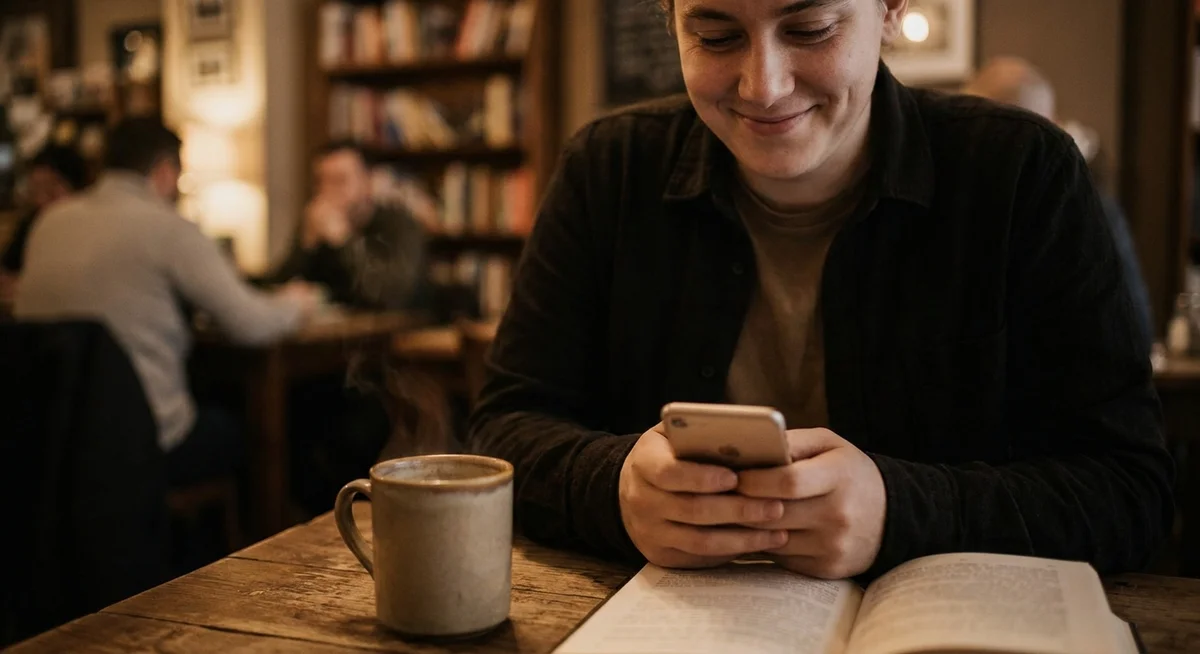
Social anxiety doesn't just make parties uncomfortable. It makes the rehearsal in your head exhausting before you've said a single word. An AI friend app gives you a place to have real conversations without any of the social risk attached, and a lot of people with social anxiety are finding that matters more than they expected.
Key takeaways
- AI friend apps let you practice conversation without fear of judgment or embarrassment
- You can rehearse specific situations, like job interviews, first dates, or difficult talks
- The low-stakes environment can help reduce the avoidance cycle that keeps social anxiety going
- AI conversation is not a replacement for therapy, but it can be a useful daily practice tool
- Apps with persistent memory (like Kintora) build a real conversation history, which adds confidence over time
Why does social anxiety make regular conversations so hard?
Social anxiety is not shyness. It's a loop: you anticipate something going wrong, your body responds as if it already has, and then you avoid the situation to get relief. The avoidance feels good short-term and makes things worse long-term. Every conversation you skip is a conversation you don't get to practice.
The problem is that practice requires exposure. And exposure, for someone with social anxiety, feels genuinely threatening. That's the catch. You need reps to build confidence, but getting reps means tolerating discomfort that feels disproportionate to the actual risk.
This is where an AI conversation partner changes the math a little.
How does an AI friend app actually help with social anxiety?
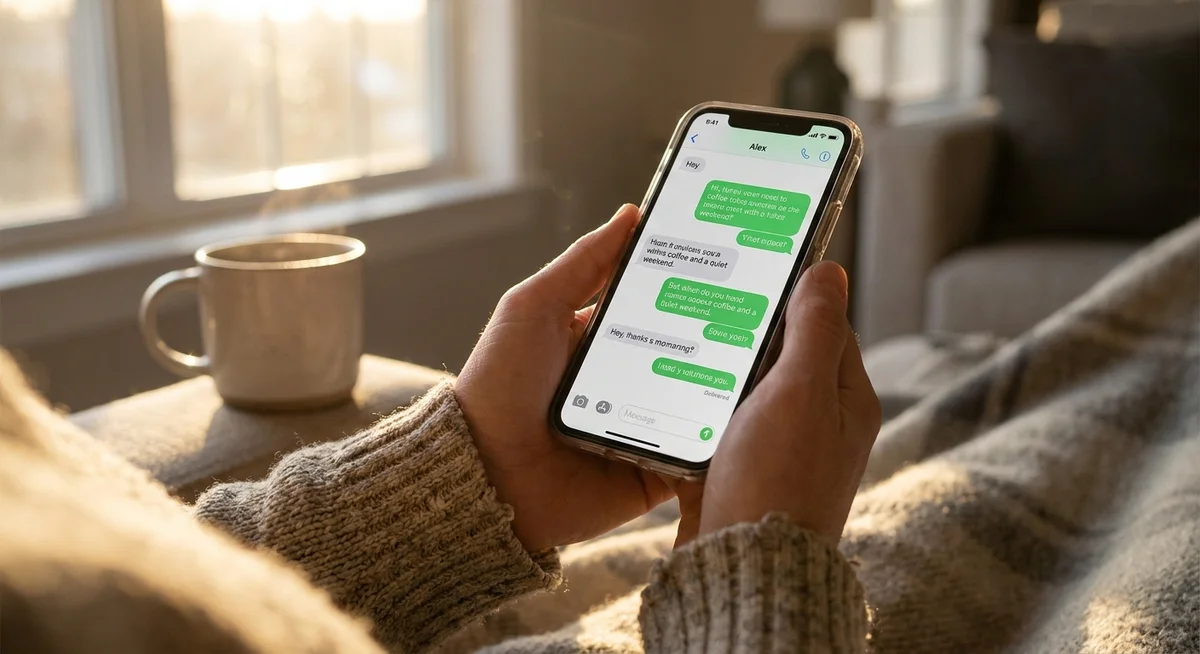
The core benefit is simple: you get to have a real-feeling conversation with zero social consequence. Nobody judges you, nobody remembers your awkward pause, and you can close the app and try again tomorrow with no damage done.
What works well
- Practicing specific conversations before they happen (job interviews, asking someone out, confronting a friend)
- Getting used to the rhythm of back-and-forth dialogue without freezing up
- Rebuilding the habit of talking when anxiety has made you go quiet for a while
- Trying out different ways of expressing yourself to see what feels natural
- Calling or voice messaging when you want to practice spoken conversation, not just text
What it won't do
- Replicate the full physical experience of a face-to-face conversation
- Provide clinical treatment or replace a therapist's guidance
- Automatically transfer your practice gains to real-world situations (you still have to do the real thing)
- Push back the way a real person might in a heated moment
- Diagnose or assess your anxiety in any clinical sense
What does rehearsing a conversation with an AI actually look like?
Say you have a difficult conversation coming up. Maybe you need to tell a friend something they won't want to hear, or you have a job interview that's been living rent-free in your head for a week. You can open an AI friend app and just... say it. Out loud, or in text, to a character who will respond and keep the conversation going.
The AI won't give you a perfect script to memorize. What it gives you is the experience of having the conversation once before you have to have it for real. That first run-through, even with an AI, takes some of the novelty out of the situation. You've "been there" already. The words feel less foreign.
With an app like Kintora, which uses persistent memory across every conversation, the character you're talking to builds up a picture of you over time. They remember what you've mentioned before, what you've been working on, what's been hard. That continuity makes the conversations feel less like a practice drill and more like an actual relationship, which is a different kind of useful.
Is this the same as talking to a chatbot?
No, and the difference matters. A standard chatbot handles tasks: it books your flight, answers a FAQ, resets your password. It's not trying to hold an ongoing relationship with you. It doesn't remember your name between sessions. It responds, it doesn't engage.
An AI friend app is built around character and continuity. Kintora, for example, is set in a fictional city, and each person you talk to has a personality, a history, and a way of speaking that stays consistent. The conversation feels like talking to someone, not querying a database. For someone working through social anxiety, that distinction is the whole point. You're not practicing transactions. You're practicing connection.
If you want a fuller picture of what separates these categories, the breakdown in AI friend vs AI assistant vs character chat is worth reading.
Can you use voice calls for practice, not just text?
Yes, and honestly for social anxiety specifically, this is where things get interesting. Text is lower pressure. Voice is closer to the real thing. Some AI friend apps, including Kintora, let you call your AI friend the same way you'd call a person. If phone calls are one of the situations social anxiety hits hardest, practicing them with an AI before a real call is genuinely useful preparation.
You're not just rehearsing words. You're rehearsing the pace of spoken conversation, the gaps, the transitions, the moments where you have to respond without a second to think. That's the stuff that's hard to build from text alone.
FAQ
Can an AI friend app replace therapy for social anxiety?
No. An AI friend app is a conversation tool, not a clinical treatment. If social anxiety is significantly affecting your daily life, a therapist who specializes in cognitive behavioral therapy (CBT) or exposure-based approaches will give you structured, evidence-backed support that an app can't provide. That said, daily low-stakes conversation practice can complement therapy well.
Will I become more dependent on the AI instead of talking to real people?
It's a fair thing to watch for. The goal is to use AI conversation as a warm-up, not a permanent substitute. If you notice yourself turning down real social situations because the AI feels easier, that's worth paying attention to. Used well, it builds your confidence for human interaction rather than replacing it.
What if I freeze up or say something awkward in the AI conversation too?
That's fine, and it's part of why it's useful. You can pause, restart, or just keep going. There's no social fallout. Freezing up with an AI and working through it is actually decent practice for the same thing happening in real life. Over time, those moments feel less catastrophic, which is the whole point.
How long should I spend talking to an AI friend if I'm using it for social anxiety practice?
There's no set prescription. Even 10 or 15 minutes a day of actual back-and-forth conversation adds up. Consistency matters more than session length. The goal is to make conversation feel like a normal part of your day, so short and regular usually beats long and occasional.
Meet your Kintora characterStart a conversation with someone from the fictional city of Kintora, where every character remembers you.